
Wolfgang Geissler
(Photographs: © Wolfgang Geissler)
Let me hazard a guess: among our 350 or so ABS members, I may well be the only former Anglo-Austrian Society ‘exchange child’. My connection with the AAS began in 1959, when my parents became concerned that my English was worse than my Latin. An exchange with ancient Rome was, regrettably, no longer an option.
They were advised to contact the Society, whose Vienna office I remember being on the Stubenring. Arrangements were duly made, and that July, aged fifteen, I set off for Grimsby to spend almost five weeks with an English family.
I even spent the last week in the fifth form at the local grammar school before the summer holidays. I remember the history teacher discussing the Congress of Vienna, apparently in my honour. It was a thoughtful gesture, although ‘Metternich’ was the only word I understood. The finer points of European diplomacy escaped me entirely.
The exchange worked both ways. In 1960, the boy from my host family came to stay with us in Vienna for nearly five weeks.
Grimsby was not the England of country-house novels, but that scarcely mattered. I loved the place and the people, and returned home determined that one day I would live in Britain. Ten years later, in 1969, I did, and stayed for forty years. There I built a career and met the Scottish woman who became my wife. Both our children were born and brought up in Scotland. I later became a member of the AAS myself and remained one until 2010.
Welcoming our AAS guests to the Hotel Imperial on Sunday, 11 October 2026, therefore had a particular personal significance for me. My parents had hoped to improve my English. I doubt they expected me still to be doing the homework sixty-seven years later.
Our President, Professor Kurt Tiroch, promised a five-minute introduction, with the proviso that these things sometimes take a little longer. He had sixteen years of activities to fit in, so a little latitude seemed reasonable.
Kurt recalled being approached in 2009 to revive the Austro-British Society, originally founded in 1945. After a year spent establishing whether there was still an appetite for it, he relaunched it in September 2010. None of the prospective supporters had actually said yes. Fourteen had not said no, however, and Kurt evidently regarded that as sufficient encouragement.
The original plan was to hold ten to twelve events a year. Sixteen years and 480 events later, that estimate looks rather cautious. Lectures on diplomacy, economics, science and culture share the programme with social gatherings, visits to British carmakers and trips to football grounds. Members have attended the Last Night of the Proms and visited the Royal Enclosure at Ascot; Wales is next on the British itinerary. Membership fees and corporate sponsorship sustain the programme, with a board of twelve volunteers doing the work. Kurt’s underlying aim remains to give members plenty of worthwhile occasions to meet, learn and enjoy themselves.
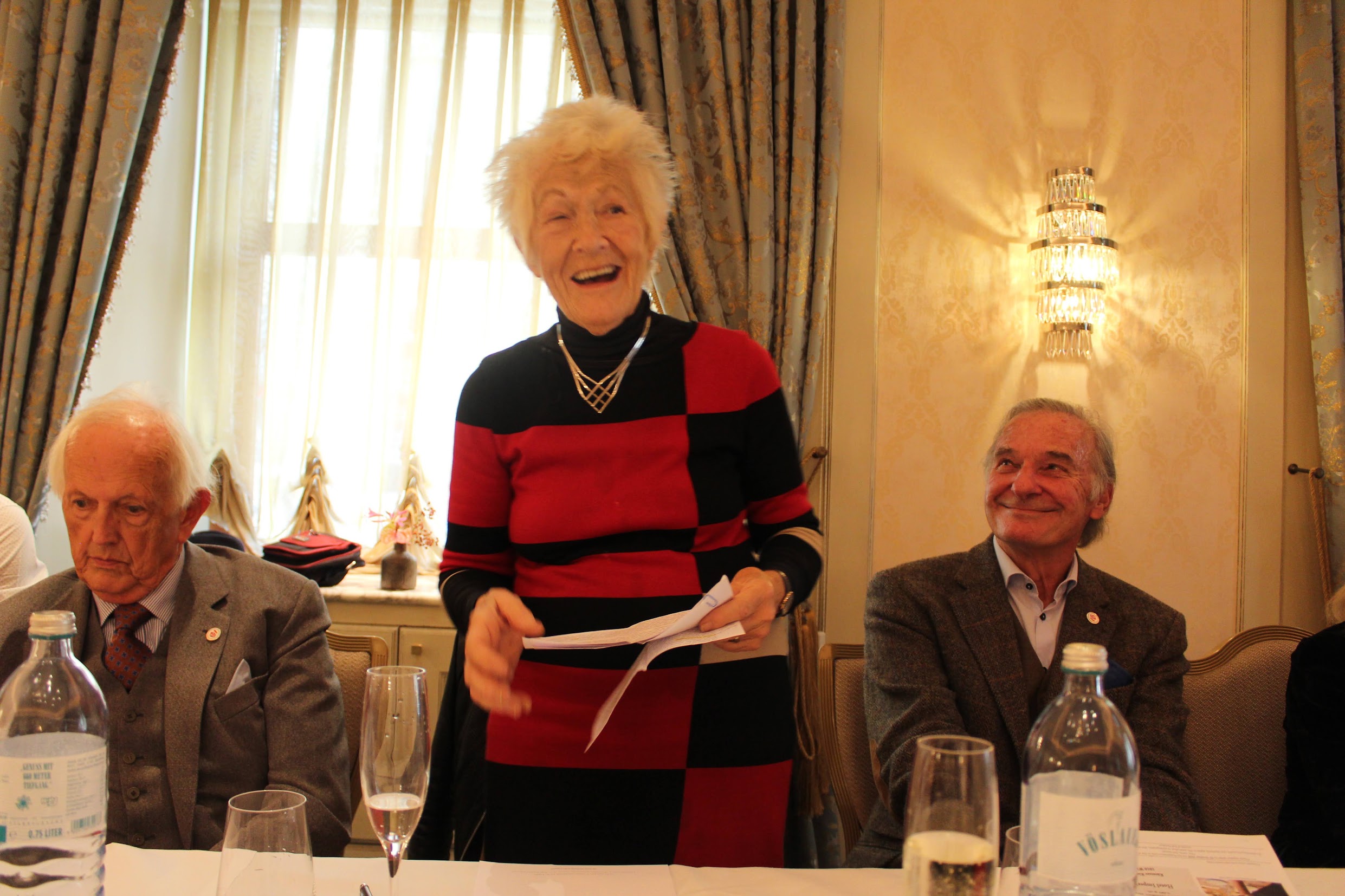
Dame Janet Ritterman began with warm thanks for the welcome and for the opportunity to meet the members of a Society which the AAS regards as its sister organisation. The setting was splendid, but it was the company she had particularly looked forward to.
Founded in London in 1944, the AAS originally drew much of its membership from Austrians who had come to Britain during the war. It now also attracts people whose affection for Austria began with a holiday or another visit, although family connections remain strong. A show of hands revealed that at least half of our visitors had Austrian family ties, and at least six had been born in Austria. One guest wanted to know whether having an Austrian wife counted. It certainly did.
The AAS has 355 members, a number close to our own, but faces a different practical problem: its members live across Britain and beyond. About half are in London and the Home Counties; the rest are spread from northern Scotland to the south coast, including Wales, Northern Ireland and the Channel Islands, with some in Austria too. A London event is therefore only part of the answer to keeping members involved.
Regional Stammtisch groups have long been central to the Society’s life. The Chilterns group was well represented amongst our guests, and the Treasurer, Robert Hopkins, has recently established another in Evesham. By coincidence, he was seated beside me, the ABS Treasurer. Judy Raumann organises the central London group, which meets near Euston on the fourth Wednesday of each month. Dame Janet extended a welcome to any of us who might happen to be in London then. A monthly virtual Stammtisch, begun during the pandemic, has continued to bring together people living far apart. Talks in English are followed by smaller discussion groups in English or German, allowing everyone to take part.
Alongside this membership programme stands the AAS’s work as a grant-giving charity. Dame Janet explained that a fund established in memory of the Society’s first secretary, and carefully managed since its early years, still helps finance projects today. The purpose is to encourage a better understanding of Austrian and British culture and ways of life through work that can be shared with others.
Her examples showed how varied that work can be. The Society supported an exchange between an Austrian choir and a Scottish choir with an Austrian conductor, enabling them to rehearse and perform together in both countries. It also helped fund a film made in Tyrol by young Austrian and British filmmakers, and supported an exchange between hospitals in Austria and Britain working in a particular area of research.
One beneficiary was sitting amongst us. Felix Wagner, now an AAS trustee, had held the Angela Krosik Doctoral Award during his studies at Oxford. Dame Janet congratulated him on completing his doctorate in a field involving artificial intelligence. He is now back in Vienna, working for Snapchat, and she encouraged us to ask him about his research. Here was an opportunity to hear directly what the Society’s support had made possible.
For a former exchange child, it was especially pleasing to hear that exchanges for young people have taken a new form. Young chamber music groups from Austrian and British conservatoires spend time working together in both countries before giving a concert. Their performances include music they have developed together during the exchange, and some participants have already asked whether they might do it again.
The Society also works closely with the Austrian Cultural Forum in London and continues to try new events, including a fashion lunch held for the first time last year. Its website carries information on grants and an archive of quarterly newsletters. Dame Janet encouraged anyone who knew of a suitable project to direct the people involved to the grant information.
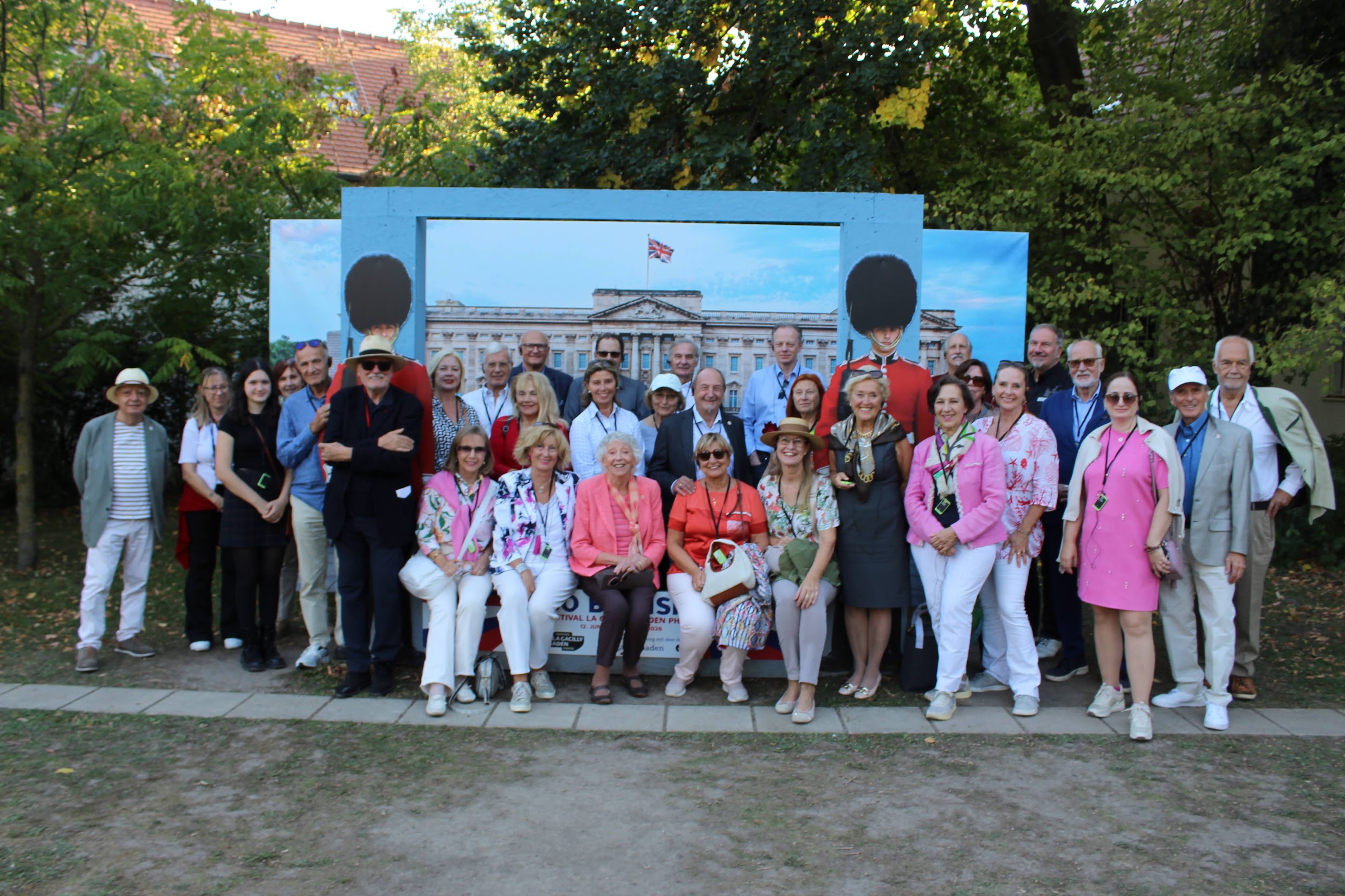
This visit to Vienna was a first of its kind for the AAS. Dame Janet spoke warmly of the pleasure of getting to know people in an organisation with which her Society already felt close. She was also beginning to wonder what further cooperation might grow from the meeting. Her invitation to talk to one another was readily taken up.
Our Vice-President, Ambassador Dr Alexander Christiani, added his welcome as a former Austrian Ambassador to the Court of St James’s. He recalled his longstanding links with the AAS and paid tribute to Dame Janet’s contribution to Austrian science and culture, recognised with a high Austrian decoration. He also spoke of Austria’s enduring gratitude to the Society for welcoming so many Austrian children to Britain after the war. As one of those children, I needed no persuading.
Alexander then offered a glimpse of diplomatic life which seldom makes it into an official report. A light bulb above the entrance to the Austrian Residence in Belgrave Square needed changing. His butler was afraid of heights, so the Ambassador went up the ladder himself, with his wife holding it steady below. Someone alerted the diplomatic police, who arrived to find an apparently unauthorised man at work on diplomatic premises. His wife’s explanation that he was the Austrian Ambassador initially met with disbelief. Once his identity was established, a more senior officer had one bewildered question: ‘Don’t you have staff?’
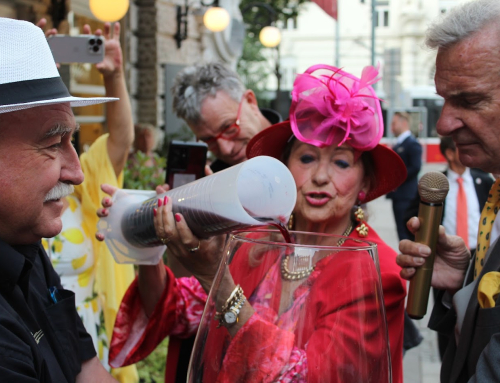
Delicious little dishes were served, with plenty of Schlumberger Sekt and a choice of wines. Dame Janet was particularly taken with the Grüner Veltliner.
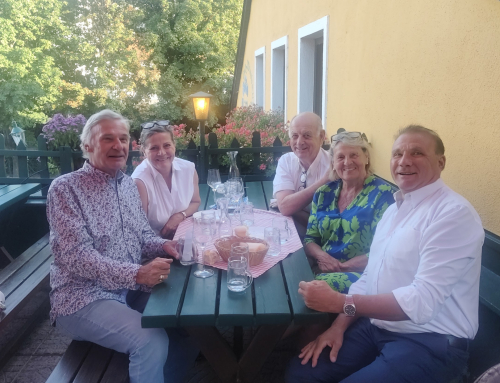
The afternoon continued with conversation around the tables and plenty of laughter. When Kurt eventually brought the reception to a close, he hoped everyone had enjoyed it. Those who had not were kindly asked not to tell anybody. It seemed an unlikely problem.
And here we are, my Scottish wife and I, amongst friends in Vienna, thanks to the Anglo-Austrian Society and the exchange it arranged for me sixty-seven years ago. My parents wanted me to learn English. They could hardly have imagined how much else would follow.
Hinterlassen Sie einen Kommentar