
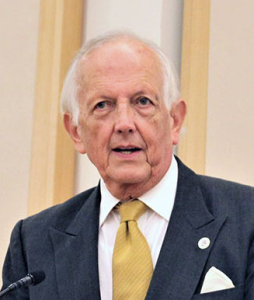
Written by Nate SWANSON. He is director of the Iran Strategy Project at the Atlantic Council .He served as Director for Iran at the National Security Council from 2022-2025and as member of the Trump’s Administration Iran negotiating team.
The Article appeared in FOREIGN AFFAIRS on August 25, 2026
Article abbreviated by Alexander Christiani and is seen in connection with and in continuation of Policy Paper No. 43
For 47 years, the Islamic Republic has bedeviled U.S. presidents. The 1979 Iran hostage crisis helped doom Jimmy Carter’s reelection bid. The Iran-contra scandal in the mid-1980s badly tarnished Ronald Reagan’s foreign policy record. And Barack Obama’s 2015 nuclear deal with Iran, the Joint Comprehensive Plan of Action (JCPOA), led to an unprecedented situation in which the U.S. Congress invited a foreign leader, Israeli Prime Minister Benjamin Netanyahu, to Washington to argue against it.
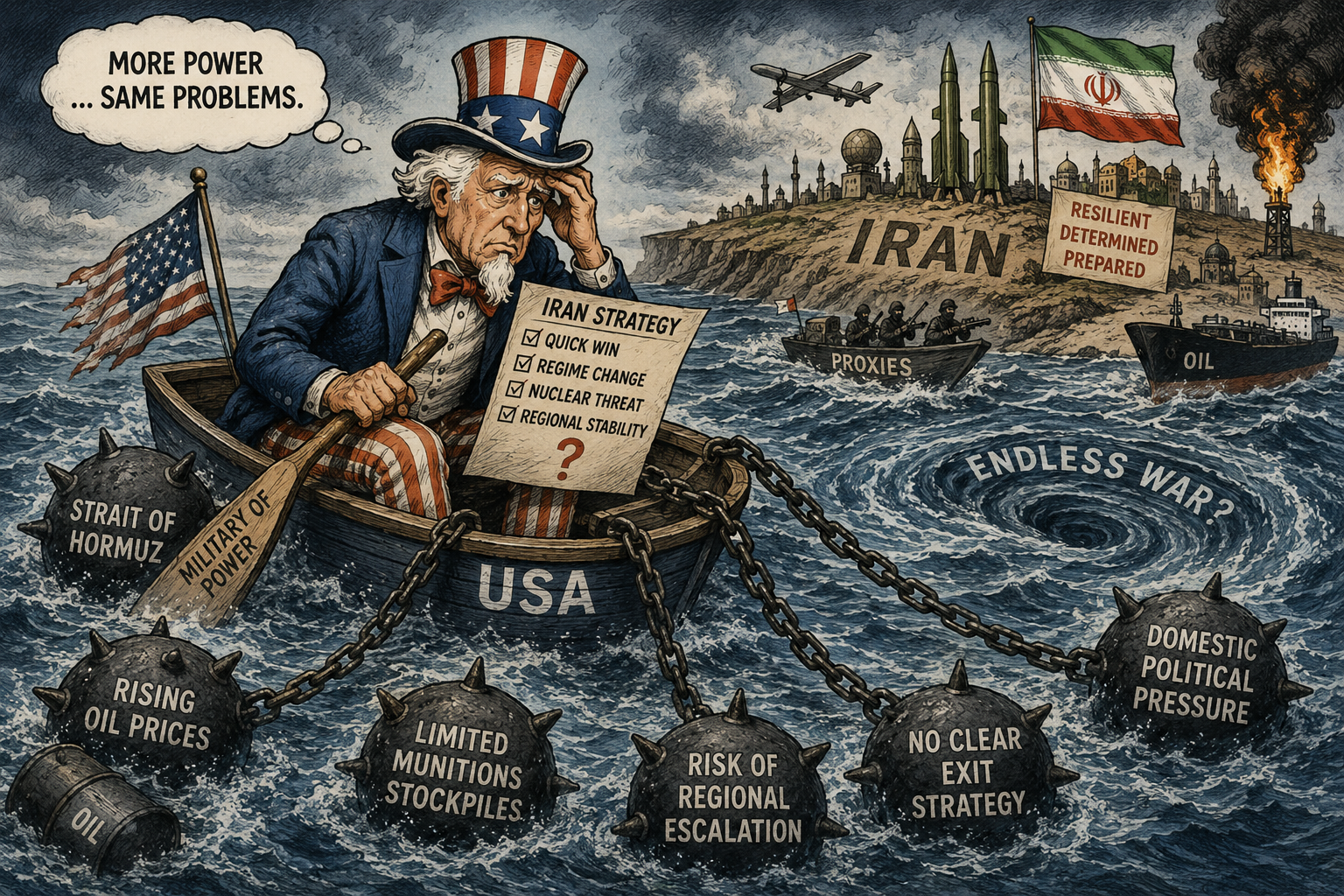
In February, when he launched his war against Iran, President Donald Trump declared that he intended to break this embarrassing pattern once and for all. By crushing Iran militarily and effecting regime change, he boasted that whereas other presidents had only talked about the Iranian threat, he was taking decisive action to end it. But six months later, Trump has become yet another U.S. president facing a dangerous humiliation related to Iran; the fallout from his excursion threatens his party’s prospects in the midterm elections. Now, perhaps in desperation, Trump is attempting to squeeze Tehran with an economic noose. But as it is constructed, this economic-pressure operation poses a greater threat to U.S. credibility than it does to Iran’s economy.
In truth, the multifaceted war Trump has launched is not a break with precedent but the apotheosis of the same flawed strategy that has undergirded U.S. policy toward Iran from the Islamic Republic’s inception, in 1979. Iran’s theocratic regime has continually flummoxed U.S. administrations in part because it contains profound contradictions. It is simultaneously ideological and transactional. Tehran continues to adhere to the core featureFor 47 years, the Islamic Republic has bedeviled U.S. presidents. The 1979 Iran hostage crisis helped doom Jimmy Carter’s reelection bid. The Iran-contra scandal in the mid-1980s badly tarnished Ronald Reagan’s foreign policy record. And Barack Obama’s 20s of its revolutionary ideology, including its anti-American and anti-Israeli foreign policy, but can also act with pragmatism when circumstances demand it. Iran accepted meaningful limits on its nuclear program in 2015, for instance, and reversed decades of hostility toward Saudi Arabia by normalizing ties in 2023. Iran’s relationship to the U.S. national interest is confusing, too. The regime does pose a direct threat to the United States because of its illicit nuclear program. And long before the current war began, the terrorism and proxy militias Iran funded were menacing U.S. citizens and shipping through the Red Sea. Yet for most Americans, Iran remains a distant afterthought. A war that has extensively destroyed Iranian infrastructure, distorted the country’s economy, and killed an entire echelon of leaders, as well as thousands of soldiers and civilians, has had almost no impact on the United States other than driving up gas prices.
To address these dualities, Washington has often stripped nuance from policymaking and oriented U.S. strategy around pressure as the primary tool to contain Iran and compel it to behave differently. This pressure strategy has rested on two pillars: establishing a credible military threat and engaging in economic coercion. But instead of resolving the perplexing paradoxes posed by the Islamic Republic, this approach only deepened them—especially as Trump has sought to intensify the pressure strategy. A wave of domestic protests in January showed that Iran is internally combustible, but the war proved that the Islamic Republic is resilient and will not capitulate. Airstrikes have weakened the regime militarily but strengthened its standing internally. Iran acknowledges that it needs sanctions relief, but it is also learning that time is on its side and that, by controlling the Strait of Hormuz, it can impose reciprocal consequences for pressure.
The irony of Trump’s failed war on Iran—and his stop-start negotiations to try to end it—is that it has so severely weakened Washington’s ability to exert pressure on Tehran that no future administration will ever be able to revert to the traditional U.S. playbook. But that could also be the only upside of a war that has already exacted a heavy toll on U.S. munitions and the global economy. The war could—and should—force a broader reckoning with 47 years of failed strategy and change Washington’s approach for good.
ONE-WAY RATCHET
The second historic bedrock of the United States’ pressure strategy has been economic coercion. Some sanctions, such as those designed to restrict Tehran’s ability to sell oil, have had a profound impact on Iran’s economy. But they have mostly failed to effect the policy changes they were designed to drive. Following the 1979 seizure of the U.S. embassy in Tehran—and Khomeini’s embrace of the takeover—Carter imposed a series of punitive actions, including an embargo on U.S. investment and trade with Iran. That move ended the two countries’ previously deep trade and defense partnership, but it did little to curtail Iran’s exports to the rest of the world. In 1996, Congress expanded the economic-pressure approach with the Iran Sanctions Act, which limited even non-Americans’ ability to invest in Iran’s energy sector. In 2012, Congress, as well as the European Union, further targeted Iran’s oil revenue and its central bank, cutting Iran’s oil exports in half virtually overnight. Those provisions were relaxed under the JCPOA, then reimposed in 2018 by the United States after Trump withdrew from the agreement and by Europe in 2025 when a so-called snapback clause triggered.
In the current war, Trump has cranked up economic pressure to its zenith by blockading Iranian ports. The war, however, finally imposed consequences on the American public when Iran closed the Strait of Hormuz and targeted Gulf energy infrastructure, wreaking havoc on global energy shipments. Iran’s economy was already under tremendous strain before the war, and the blockade has exacerbated that strain. But Trump abandoned the first blockade after 66 days. He has recently imposed a second blockade and a broader pressure campaign aimed at curtailing Iran’s remaining trade that he advertises on social media as the “MOST CRUSHING ECONOMIC OPERATION EVER TAKEN AGAINST ANY COUNTRY.” There is no doubt this campaign will hurt Iran and its economy. But it will almost certainly fail to force Tehran’s surrender. Rather than succumb to pressure, recent history suggests that Iran will use its missile and drone program to exact steep economic costs on the global economy—either in the Strait of Hormuz or against Gulf countries—to again shift Trump’s risk calculus. The Islamic Republic believes it can outlast the United States’ will to exert economic pressure, just as it can survive U.S. military pressure.
The failed war and blockades, as well as Trump’s approach to negotiations this year, will permanently alter the utility of economic pressure. Whereas sanctions relief was once the reward the United States could offer Iran for constraining its nuclear ambitions, Trump issued oil-export waivers in March without any Iranian concessions and again in June in return for a vow merely to keep the Strait of Hormuz open.
TEAR UP THE PLAYBOOK
No matter how this war ends, the United States will not be able to return to the strategy that governed its relations with Iran for 47 years. Trump’s potential Republican successors, Vice President JD Vance and Secretary of State Marco Rubio, differ strikingly in their views of what to do next. In recent public comments, Rubio has suggested a preference for expanding a pressure strategy, telling Fox News in early August that the Iranian regime “must change” fundamentally and arguing that the United States should further ratchet up “the price” of intransigence A pressure strategy, however, was only sustainable, if not efficacious, insofar as it did not demand much from the American people. And with its newfound control of the Strait of Hormuz, Iran has far more ability to make the United States and its key Middle Eastern allies pay for applying pressure. Vance, by contrast, appears to favor retrenching from Iran and the Middle East more broadly—an approach that would loosely resemble Trump’s and President Joe Biden’s approach to Afghanistan, which cut the United States’ losses entirely. But Iran is a harder country to walk away from. Its nuclear program and strategic location give it direct leverage over the United States and the global economy in a way Afghanistan never did.
The best thing Washington can do at this point is to stop acting without thinking. And U.S. policymakers need to dwell more on lessons from the past. Military and economic pressure did occasionally shape Iranian decision-making. Pressure helped push Iran to temporarily pause its nuclear program during George W. Bush’s administration and, later, to accept the JCPOA. But pressure did not topple the Islamic Republic, make the United States safer, or improve the lives of ordinary Iranians; in fact, the U.S. pressure strategy likely deepened Iranian civilians’ hardship.
Ultimately, what Washington wants most is for Iran to interact productively with its neighbors, abandon an illicit nuclear program, and promote the well-being of its people. But like it or not, the Islamic Republic gets a say in what happens next in Iran. Forty-seven years of prioritizing pressure culminated in a costly war that revealed the limits of what that approach can accomplish. It would be a silver lining if the Iran war’s failure forced a reckoning in Washington about the United States’ preconceived notions about Iran and the well-worn playbook that has led to this morass.

Hinterlassen Sie einen Kommentar