by Colin Munro
On 15 June at the Diplomatic Academy (DA) Professor Melanie Sully gave a vivid description of the mood, in England, ten years ago. The EU was perceived as an economic issue, not as a peace process. It seemed to me, as a remain voting Scot, that she was describing an English identity crisis. Melanie and I had shared the platform (on 9 June 2016) at a debate on BREXIT, organised by the Austro British Society (ABS) at the DA before the referendum. We set out the case for voting to Remain.
I recall now two points in my opening remarks ten years ago. Three personalities, Putin, Trump (before his election in November 2016), and Marine Le Pen, were in favour of BREXIT. Their support for BREXIT made voting to remain a no brainer. I also argued that advocates of BREXIT had considered neither its possible impact on the fragile peace in Northern Ireland, nor on the UK’s relationship with the Republic of Ireland, transformed by the 1998 Belfast/Good Friday Agreement. The EU made an essential contribution to peace in Northern Ireland. The latest riots underline how fragile the peace process still is.
There was widespread criticism in the pro Brexit media that the EU was unreasonable in the negotiations. In my view Michel Barnier did an excellent job. He kept the EU 27 together: gave priority to the Northern Ireland peace process; and to support for the government in Dublin.
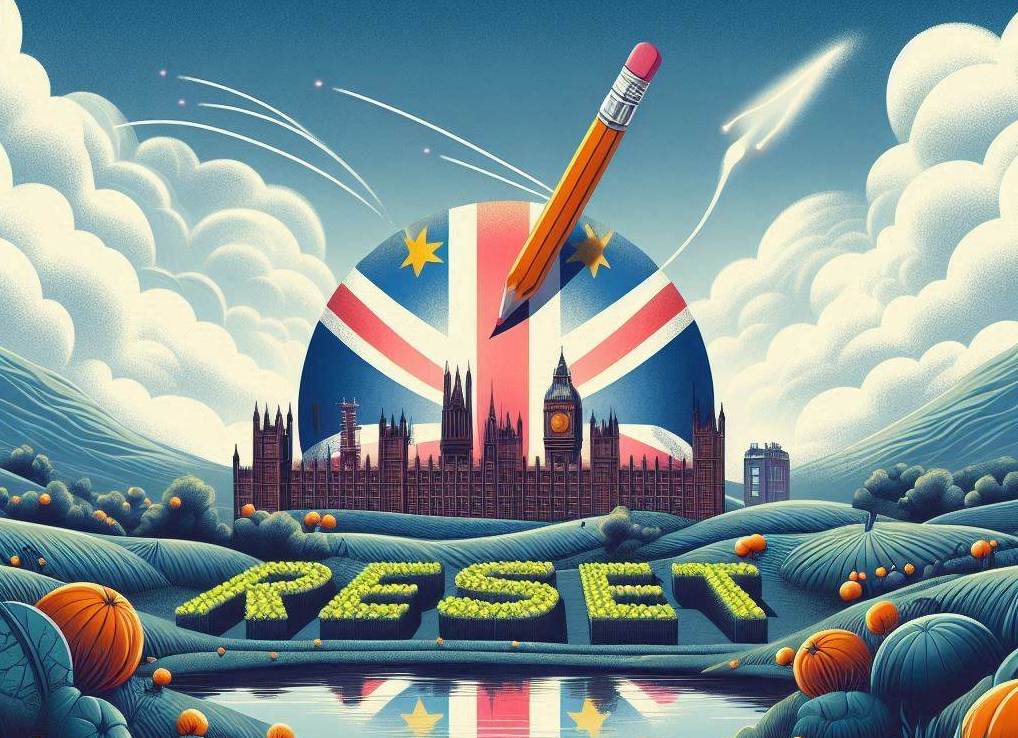
Boris Johnson claimed (before his election victory in December) in August 2019 that BREXIT would put rocket boosters under the British economy. In fact, the economy is at least 4% smaller than it would have been without BREXIT. That Brexit is a strategic and economic disaster is dawning gradually on the English electorate. Voters’ remorse has set in.
Efforts to stop BREXIT began, as did work by British Diplomatic missions to protect the interests of British citizens who had chosen, before the referendum, to settle in an EU member state. The EU had an equivalent interest in EU citizens in the UK. The Bishop (Robert) of Gibraltar in Europe convened a BREXIT Round Table in Brussels on 18 January 2017, before the Prime Minister (Theresa May) notified the EU of the decision to leave, according to Article 50 of the Maastricht Treaty. A year later, the Archbishop of Canterbury set forth the position of the Anglican Church on the EU at a speech in Novi Sad (Serbia).
• “The EU has been the greatest dream realised for human beings since the fall of the Western Roman Empire. It has brought peace, prosperity, compassion for the poor and weak, purpose for the aspirational, and hope for all its people.”
Bishop Robert’s visit to Vienna on 29 April 2017 and my contacts in Germany where I had served in Bonn, East Berlin and Frankfurt, and had been a regular lecturer at meetings of the Deutsch Britische Gesellschaft, set me thinking about how to protect and promote the interests of British Citizens living in Austria, and how to explain what was actually going in the negotiations. I attended a meeting in Munich in July 2017 of British in Germany, at which the British Consul General had a very rough time, defending the Prime Minister’s position – Brexit means Brexit and we are going to make a success of it.
The Austro British Society (ABS) was a great help in supporting British citizens. Vice President Alexander Christiani took the lead in setting up an Expertenrat to provide information on Brexit. Over the years we have produced about 40 policy papers on Brexit and related topics, many of them written and edited by Alexeander. President Kurt Tiroch’s Café Ministerium was the perfect venue for UKCA briefing meetings. The late Ian Murdoch and Wolfgang Geissler were outstanding members of our committee, while Alexander Christiani put me in touch with key officials in Austrian Ministries. Jan Hillermann (a former member of the FCO) was a tower of strength in drafting records and briefing papers. Duncan Hutchings (British Community Association) provided indispensable technical/IT support. Our work was much appreciated by Ambassador Leigh Turner and his team at the Embassy.
Our inaugural UKCA meeting took place in Café Ministerium on 13 September 2017. The Deputy Head of Mission at the embassy took part. UKCA would be an informal group to support in Austria the efforts of the British in Europe Coalition to protect the rights of UK citizens in the EU 27 and EU 27 citizens in the UK. The most contentious issue initially, was the disenfranchisement at the referendum of about 700,000 UK citizens in the EU by the 15-year rule – now abolished.
The highlight of our campaign was a lecture denouncing BREXIT at the Austrian National Bank in September 2018, by Sir Brian Unwin a former President of the European Investment Bank, hosted by the ABS and National Bank Governor Ewald Nowotny, an old friend of Sir Brian’s. Sir Brian and I are fellow members of the Reform Club in London where we also organised meetings on BREXIT.
The briefing meetings in Café Ministerium were invaluable for explaining the course of the negotiations. The Ambassador – a brilliant performer in the Austrian media in impeccable German – had to stick to the party line. I issued a final update on citizens’ rights by email on 28 May 2021 after ratification of the Withdrawal Agreement by the European and British parliaments. COVID meant that no meetings were possible. The transition period had ended on 31 December 2020. We (British in Europe) had failed to secure freedom of movement (FOM) for British citizens to settle and work through the EU.
What did we achieve? The embassy, the Austrian authorities, British in Austria (BIA), the British Community Association, UKCA, and the Austro British Society worked together to explain and diminish the impact of BREXIT. BIA helped people obtain residence cards. It was evident throughout, that 11,000 British citizens were welcome in Austria. Indeed, at one moment in September 2019, when it looked as if British pensioners would lose their healthcare rights (through a no deal BREXIT) senior Austrian officials assured me: wir werden Euch nicht fallen lassen.
British in Europe Chairperson, Jane Golding, and her team, were impressed with our work. They in turn were extremely impressive in briefing British MPs on the impact of the referendum. Our work here was reinforced by the expertise of retired FCO officials (Senior European Experts) such as Lord Kerr who had drafted Article 50, never imagining that the UK would use it. I was able to draw on their work. Personally, I derived satisfaction, as I had in my diplomatic career, in team working, especially in this case, because our work was voluntary, in a good cause.
What Next?
Russia’s invasion of Ukraine and Trump’s attitude to NATO have transformed the security landscape, for the worse. In 2016, NATO provided security for the UK and the economic value of EU membership was not understood. Voting for Brexit was not inherently risky. Not now: it is in the interest of both the UK and the EU to work together across the board. The UK, France, and Germany are leading efforts to support Ukraine which has just started negotiations on joining the EU. But, for the UK it will be a long road back.