Britain, Brexit, and the Long Search for a Post-European Self
An ABS Chronicle of Brexit and Prof Dr Sully’s The Brexit Decade – A Long Hangover
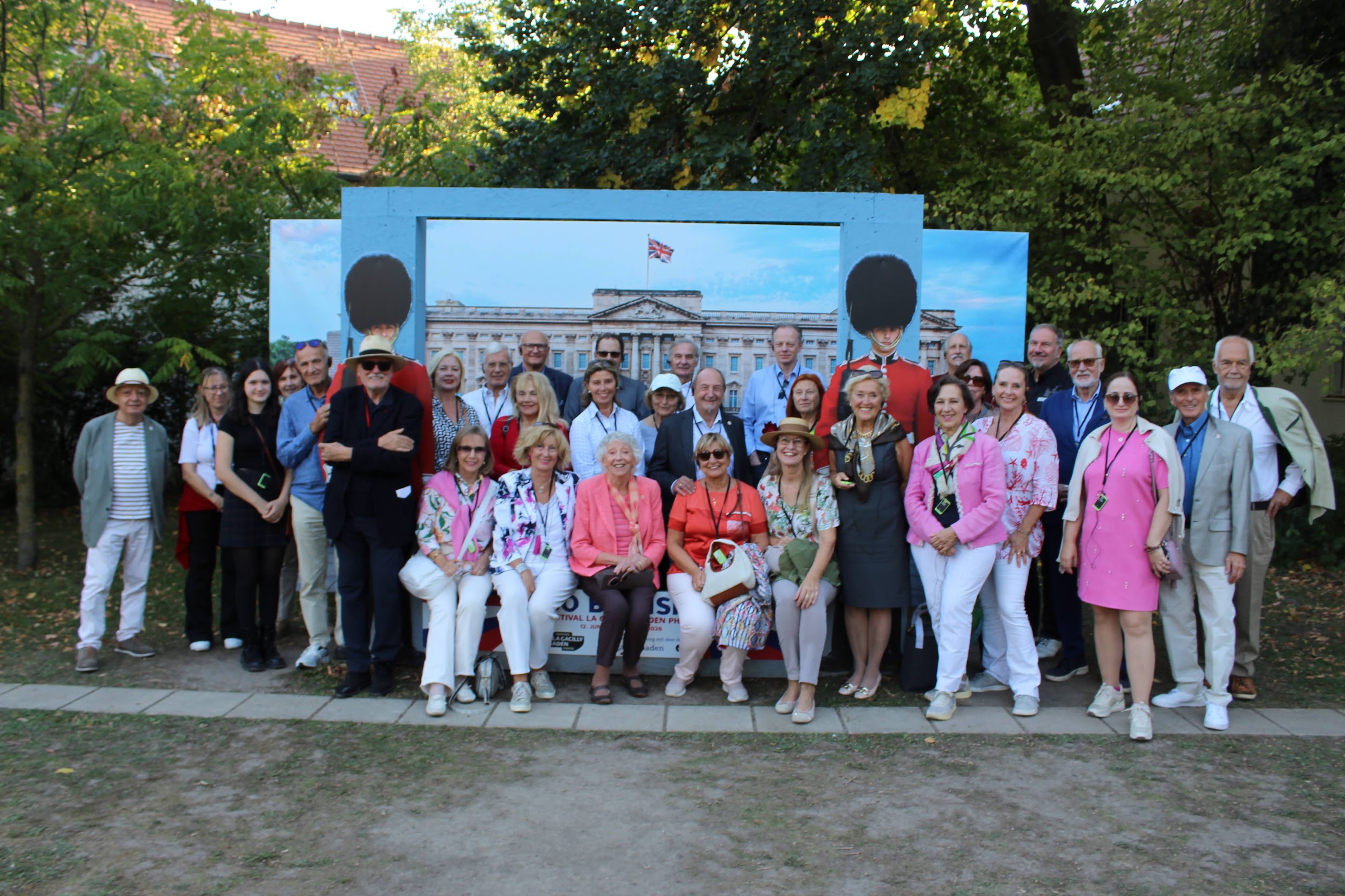
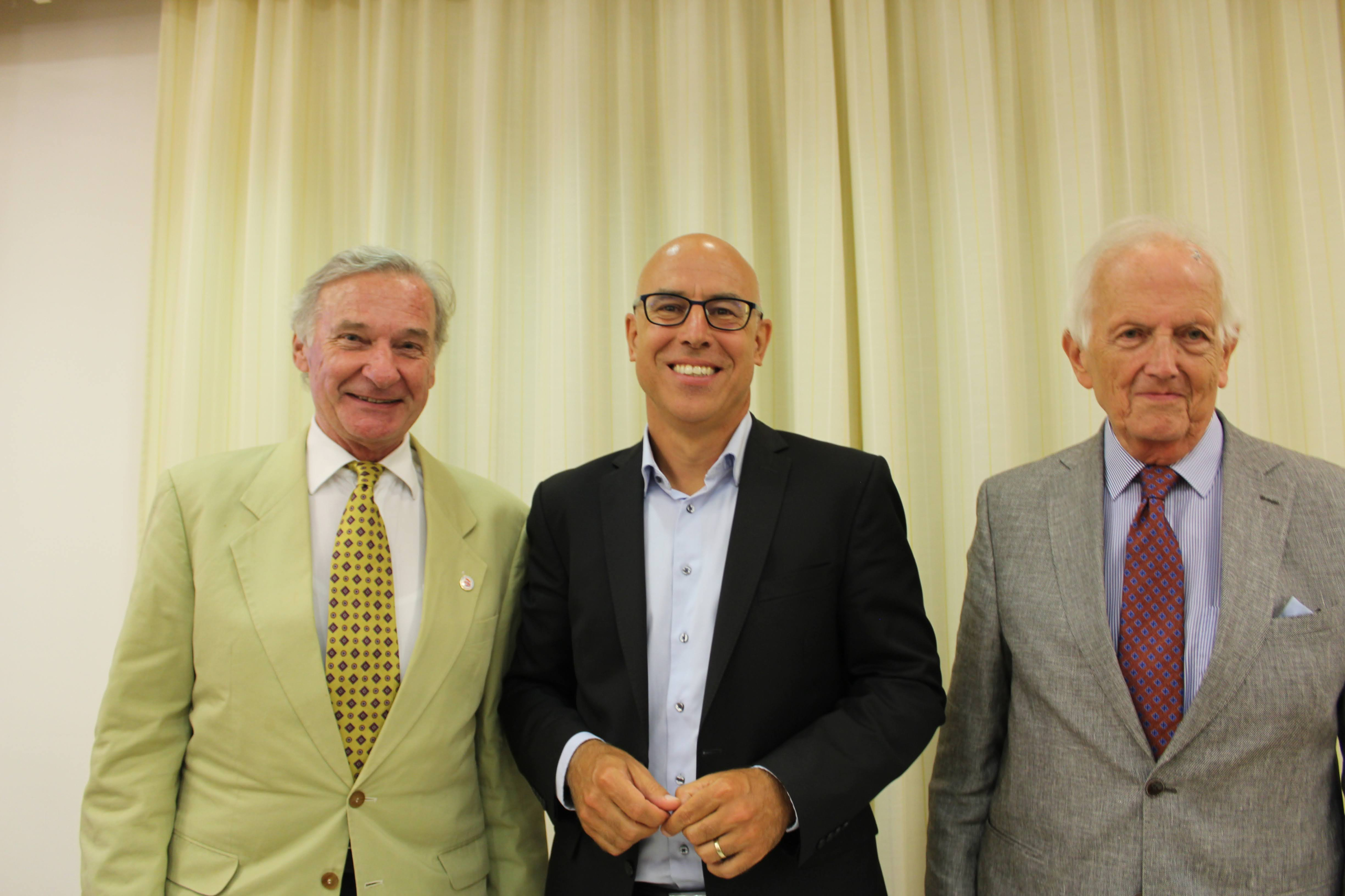
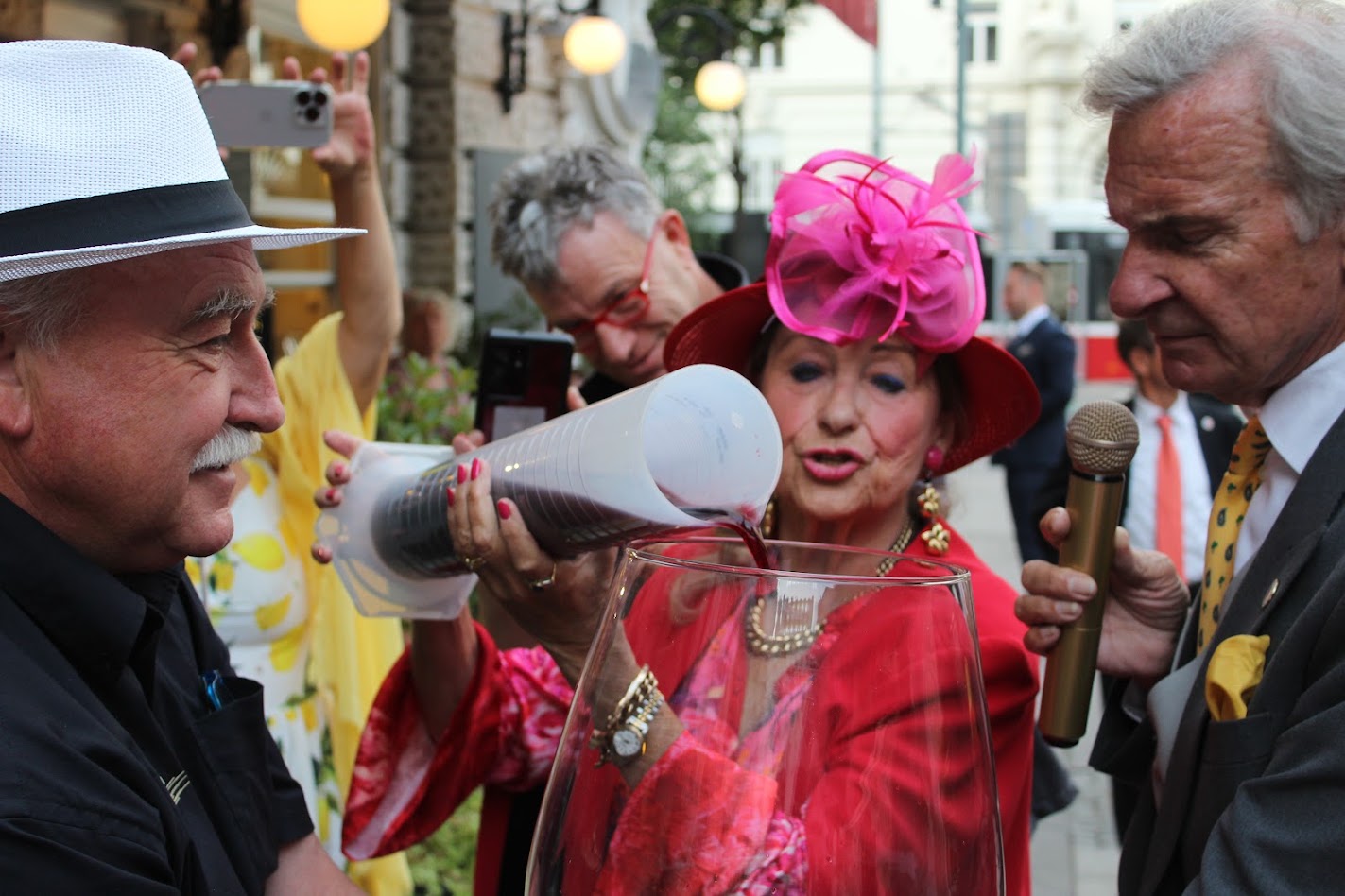
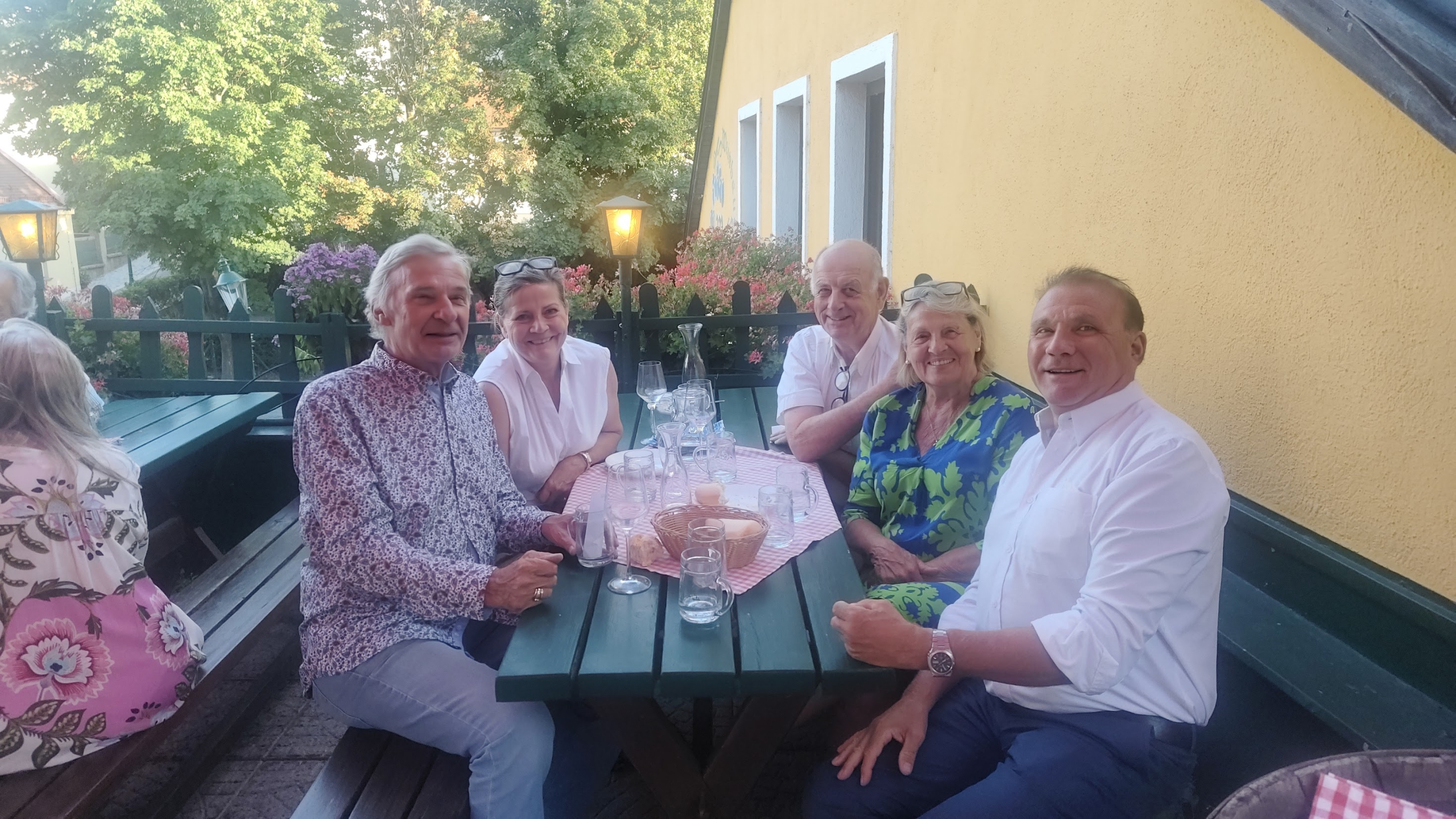
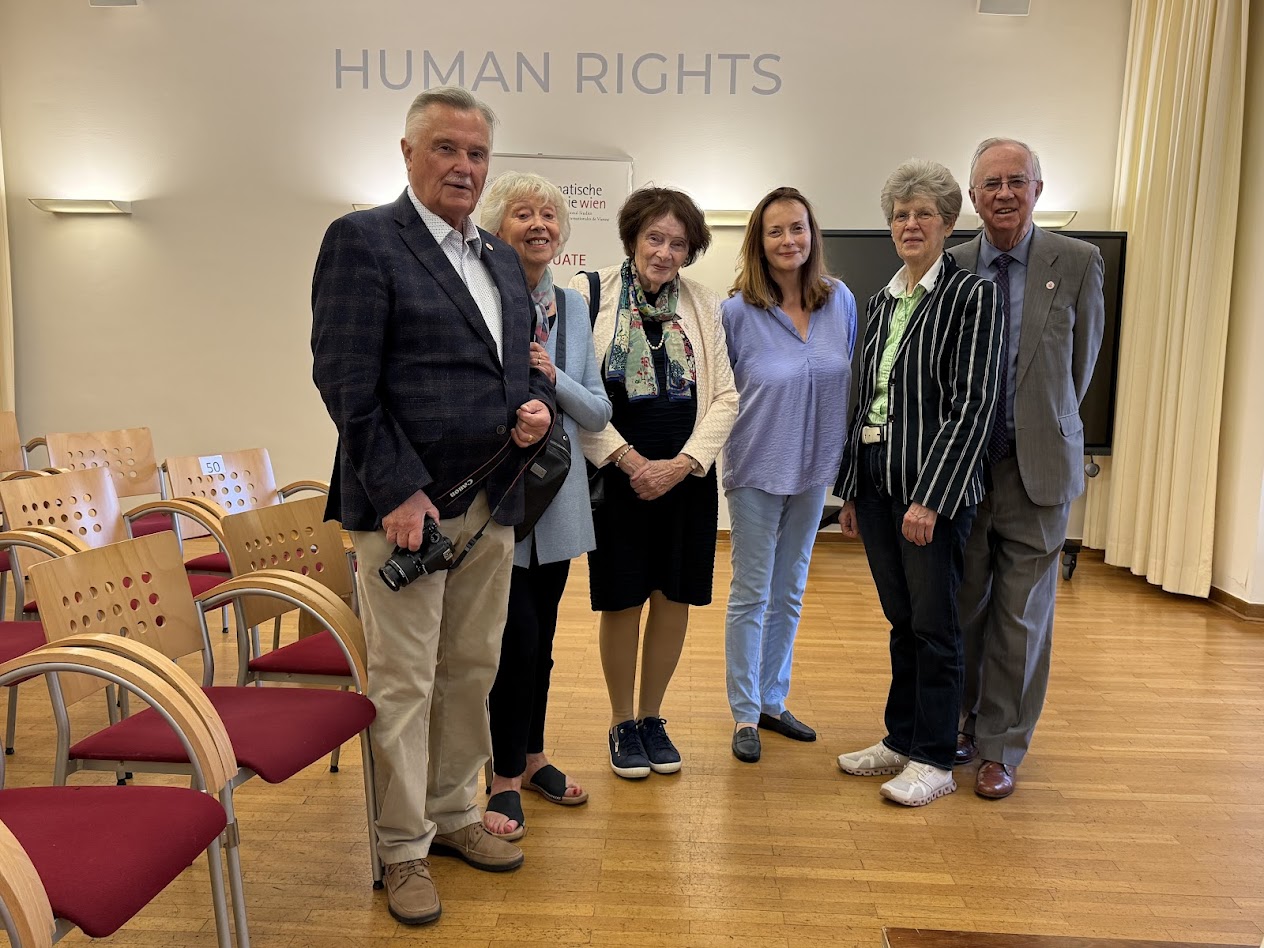
(Photos: © Wolfgang Geissler)
By Wolfgang Geissler
On 15 June 2026, the Austro-British Society welcomed Prof Dr Sully to the Human Rights Space of the Diplomatic Academy for her lecture The Brexit Decade – A Long Hangover. Ten years after the referendum, Brexit was no longer a campaign slogan, a constitutional drama, or merely a Westminster obsession. It had become part of Britain’s political, economic, diplomatic and, not least, emotional reality.
Prof Sully’s lecture came at a time when Britain’s relationship with Europe was again being reconsidered. The slogans had faded, but the consequences remained. The old question of Leave or Remain had given way to a harder and more practical one: what kind of relationship can the United Kingdom and the European Union build after a decade of argument, rupture and adjustment?
Before turning to the lecture itself, it is worth recalling that the Austro-British Society did not observe Brexit from a safe distance. The Society followed it from the beginning: through debates, lectures, discussions and reports — often with concern, sometimes with disbelief, occasionally with dark humour, but always in the hope that some clarity might eventually emerge from the fog.
What follows is therefore not an anticipation of Prof Sully’s lecture, nor an attempt to place arguments in her mouth. It is a prelude in the proper sense: an ABS chronicle of the Brexit years as they unfolded before us, including the wider constitutional question of Scotland, the Union, and Britain’s place in Europe.
Part One
From Hamlet to Hangover:
The ABS Brexit Chronicle
“To be or not to be — that is the question.”
ABS Brexit Panel Discussion, Diplomatic Academy, 9 June 2016
When Ambassador Christiani used Hamlet’s most famous line for the Austro-British Society’s pre-referendum debate in 2016, none of us could yet know how apt, how prophetic, and how painfully British that quotation would become. For Brexit was never merely a policy choice. It was a question of national existence, national memory, national vanity, and national self-deception. To be or not to be — European, British, sovereign, pragmatic, united, relevant — these questions were not settled by the referendum. They were merely released from their cage.
The ABS debate before the referendum was, in retrospect, the overture to a long opera whose later acts became increasingly difficult to classify. Was it tragedy, farce, pantomime, constitutional melodrama, or a very expensive national therapy session? Perhaps all of them. Four British voices debated the question then with passion and conviction. The Leave camp spoke of Brussels, bullying, democracy, sovereignty and the flawed European project. The Remain camp warned of political and economic damage, and of the European Union as something more than a mere trading arrangement: a peace project, a political architecture, an attempt — imperfect, certainly — to tame the destructive genius of European history. The audience, at least initially, was overwhelmingly for Remain; by the end, the sceptics had gained slightly. Even then the seeds had begun to move underground.
And then came the vote
“The Road to Brexit” — Gisela Stuart, Presseclub Concordia, 6 April 2018
What followed, over the next decade, was not simply Britain leaving the European Union. It was Britain discovering what leaving meant. That distinction, so obvious to some, came as a rude surprise to others. “Somewhere over the rainbow,” we were told, dreams would come true. The old order would end, sovereignty would be restored, democracy would be renewed, and everything would be fine in the end. If the yellow brick road led anywhere, it would surely lead to trade deals, control, confidence, and a brave new global Britain. Unfortunately, as the years unfolded, the road to Brexit began to look rather less like The Wizard of Oz and rather more like The Sleepwalkers.
The great words were there from the beginning: sovereignty, control, democracy, freedom. They sounded splendid. They always do. The difficulty was that nobody seemed quite sure what they meant in practical terms. Sovereignty, once declaimed from a platform, must eventually pass through customs, ports, supply chains, treaties, courts, borders, fisheries, regulatory frameworks and Northern Ireland. There it loses some of its rhetorical plumage. A slogan can cross a stage with ease; a lorry queue at Dover is less forgiving.
In those early days, one could already detect the fatal mixture: historical nostalgia, impatience with complexity, irritation with Europe, and that very English temptation to confuse inconvenience with oppression. The European Union, we were told, was undemocratic, overbearing, alien, bureaucratic, doomed. Britain, by contrast, would be nimble, global, independent, buccaneering. One could almost hear the rigging creak and smell the salt air. The trouble was that the map had changed, the empire had gone, the world had moved on, and the trade winds were less sentimental than the speeches.
Quem Iuppiter vult perdere, dementat prius
“BREXIT – The End Game” — Sir Brian Unwin and panel discussion, Austrian National Bank, 19 September 2018
Sir Brian Unwin, beginning with Latin, gave us the line that became almost too perfect for the occasion: Quem Iuppiter vult perdere, dementat prius — whom the gods would destroy, they first drive mad. It was hard not to think of Boris Johnson and Jacob Rees-Mogg, those gentlemen temporarily misplaced somewhere between the eighteenth century and a school debating society. The referendum, spuriously elevated from advisory consultation to sacred revelation, was now treated as the solemn will of “the people”, although considerably fewer than half the electorate had voted for Brexit. The £350 million for the NHS, the easy trade deals, the effortless prosperity, the painless separation — all these promises were by then already beginning to acquire the faint smell of old fish wrapped in yesterday’s newspaper.
Chequers died
Theresa May then appeared with Chequers, that curious construction which tried to square every circle at once: leaving the EU while keeping many of its advantages; ending jurisdiction while respecting rules; taking back control while preserving access; avoiding a hard Irish border while leaving the structures that made such a border unnecessary. It was not so much a policy as an exercise in diplomatic origami, and Brussels, unsurprisingly, declined to admire the folds. Chequers died, and with it much of the illusion that Brexit could be both hard in rhetoric and soft in consequence.
Brave new world
“BREXIT: The Meaningful Vote – What Next?” — Ambassador Munro and Ambassador Christiani, Café Ministerium, 18 December 2018
By late 2018 and early 2019, the whole affair had become what Churchill once called, in another context, “a riddle, wrapped in a mystery, inside an enigma” — except that in this case the key was not British national interest. Indeed, British national interest seemed, more often than not, to be the missing guest at the table. Ambassador Munro and Ambassador Christiani diagnosed the situation with admirable clarity: ignorance of reality, arrogance towards Ireland and the European Union, a divided society, the poisonous influence of the yellow press, and a political class unable to distinguish theatre from strategy. The “meaningful vote” became a recurring ritual of meaningful defeat. The Backstop became a theological dispute. The DUP held the match near the constitutional powder keg. And somewhere in the background came the news that, in the event of No Deal, 3,600 troops would be on standby. Brave new world indeed.
The Anglosphere Fantasy
“BREXIT: A View from Inside the House of Commons” — Julia Lopez MP, Café Landtmann, 1 March 2019
The trade fantasy was another chapter in this long education by reality. The Brexiteers dreamed of the Anglosphere. The United States, Australia, New Zealand, Canada: old cousins, old flags, old language, old sentiment. The great prize was to escape the supposedly cramped European market and embrace the wide oceans of global trade. Yet the basic geography remained stubborn. The European Union was still on Britain’s doorstep. America was still across the Atlantic. And trade, unlike nostalgia, is sensitive to distance, regulation, scale and power. The promised American deal never became the gleaming trophy Brexit required. As Jonathan Freedland had pointed out, the whole idea was less economic than political — a symbolic prize to conceal the absence of tangible gains. Julia Lopez’s lecture, brave and courteous though her answers may have been, could not escape that central contradiction: Britain had left the largest free trade area in its neighbourhood while admitting that it had lost the knack of negotiating trade deals.
The clock is ticking
“BREXIT D-Day” — Ambassador Munro and Ambassador Christiani, Café Ministerium, 28 March 2019
Then came the shambolic retreat. It was, to borrow one of my earlier phrases, a catastrophic retreat from Europe — but no little ships were waiting this time for the rescue. There was no Dunkirk romance, no armada of plucky boats, no Churchillian uplift. There was simply Westminster, trapped in its own maze, trying to discover whether it had a plan, a policy, a majority, or even a coherent sentence. Article 50 had been triggered with remarkable confidence and insufficient preparation. Parliament rejected the deal. Deadlines approached, retreated, returned under new names. Indicative votes indicated little except that MPs disliked every available option. The country watched; Europe waited; the clock ticked.
“Brexit means Brexit.”
And always there was the tragicomic gap between phrase and fact. “Brexit means Brexit.” “No deal is better than a bad deal.” “Take back control.” “Global Britain.” Each phrase was built to win a headline, not to survive contact with administration. Baldrick, at least, usually had the decency to admit that his cunning plans were absurd. Brexit Britain, by contrast, often mistook absurdity for resolve.
In all this, Ireland and Scotland were not side issues. They were the constitutional reality-checks which English politics repeatedly tried to misplace. Northern Ireland exposed the impossibility of a clean Brexit: one cannot leave a customs union and single market while pretending that a land border between the United Kingdom and the European Union has no physical, political or historical meaning. Scotland exposed the fragility of the Union: a nation persuaded in 2014 to remain in the United Kingdom partly in order to remain in the European Union was, two years later, taken out of the European Union against its will.
Where, then, was sovereignty? Where was democracy? Where was the Union in this so-called Union?
“The British Government is not saying that you can’t have your little referendum.”
“What Does the Future Hold for Scotland?” — Prof Dr Sully and Ambassador Munro CMG, Café Ministerium, 4 September 2023
Four years later this question returned with particular force at our later panel discussion, “What does the Future hold for Scotland?” Moderated by Ambassador Christiani, with Ambassador Munro CMG and Prof Dr Sully as speakers, the evening showed how deeply Brexit had unsettled the constitutional balance of the United Kingdom.
Scotland, culturally, socially and politically distinct from England, had voted overwhelmingly to remain in the European Union and yet found itself taken out by the arithmetic of the United Kingdom as a whole. At one point during the discussion, my wife asked the obvious but uncomfortable question: if Scotland had voted to remain in the European Union, and if it now wished to reconsider its place in the United Kingdom, by what democratic logic could London simply decide whether or not Scotland was allowed to ask its own people again?
It was never properly answered. Perhaps it could not be, because the honest answer would have been too inconvenient. Scotland had been promised one future and delivered another. Northern Ireland had been treated as an afterthought until it became the central problem. And England — or rather a particular political and media version of England — continued to behave as if the United Kingdom were merely England with troublesome appendices.
The discussion made clear that Scottish independence was not a romantic afterthought, but one of the most serious unresolved consequences of Brexit. Whether through independence, federal reform, renewed devolution, or a future British return to a closer European relationship, the Scottish question remained stubbornly alive.
Before addressing Scotland’s constitutional future in 2023, Prof Sully had already offered a broader diagnosis of the divisions running through British society.
Brexit as Symptom, Not Cause
“The United Kingdom – The Clock Is Ticking” — Prof Dr Sully, British Embassy, 11 August 2021
Nor was Brexit the beginning of all Britain’s problems. That would be too simple. Prof Sully has repeatedly reminded us that Brexit exposed fault lines that were already there: North and South, rich and poor, race, religion, class, monarchy, identity, woke and anti-woke, empire and post-empire, establishment and anti-establishment. Brexit did not create these fractures; it gave them a flag, a slogan and a referendum result. Britain’s unwritten constitution, long praised for its flexibility, discovered that flexibility can become fragility when conventions are abused. Sovereignty, in the British imagination, became a substitute constitution — but a dangerously elastic one.
“Hasta la vista, baby!”
“Government Crisis in the UK: What Next?” — Prof Dr Sully and Ambassador Munro CMG, Café Ministerium, 25 July 2022
Then Boris Johnson returned, as he always threatened to do. “Hasta la vista, baby!” he said at the end, borrowing Schwarzenegger’s valediction with his usual theatrical instinct. But the unspoken line was the more revealing one: “I’ll be back.” Johnson had transformed politics, certainly; whether he had improved it is another matter. He had “got Brexit done,” if by done one means legally enacted, politically exploited, and administratively deposited on the desks of others. The deeper consequences were not done at all. They were merely beginning.
The Conservative Party After Brexit
By 2022, when Prof Dr Sully and Ambassador Munro spoke to us about the government crisis in the United Kingdom, the tragedy had moved into another phase. Johnson had fallen; the Conservative Party, now increasingly shaped by its elderly, predominantly male, predominantly white membership, was choosing between Rishi Sunak and Liz Truss. The old Tory elite — gradualist, pro-European, institutionally cautious — had been overtaken by a new Tory elite: anti-EU, pro-Anglosphere, radical, impatient, and intoxicated by buccaneering capitalism. The tasks facing Britain were formidable: cost of living, NHS and social care, levelling up, Brexit, national unity. The likelihood that either candidate would solve them seemed, to put it mildly, limited. Prof Sully’s conclusion was devastating in its restraint: she did not see much of an improvement.
The Long Hangover
And so we arrive, ten years after the vote, at Prof Dr Sully’s lecture: The Brexit Decade — A Long Hangover. The phrase is exact. Brexit is no longer a campaign, no longer a slogan on a bus, no longer a promise shouted from a platform, no longer a drama confined to Westminster. It is now a lived condition: political, economic, diplomatic and emotional. The intoxication has passed. The headache remains.
Reset, Retour or Regret?
The invitation for the lecture asked whether we were looking at reset, retour or regret. As a frame for the evening, the phrase was useful, but the lecture itself would take a more specific route: the referendum campaign, the miscalculations on both sides, the negotiations that followed, the clash of political cultures, and the uncertain political mood ten years on. Britain had left the European Union, but it had not left Europe. Geography had not been repealed. Supply chains had not been moved by patriotic incantation. The Channel had not widened into an ocean, nor had the Atlantic shrunk into a garden pond. The debate was no longer simply Leave or Remain, but what kind of relationship the United Kingdom and the European Union could build after a decade of argument, disappointment and adjustment.
From Chronicle to Analysis
It was therefore fitting that the evening now moved from the ABS’s own chronicle of Brexit over the past decade to Prof Sully’s analysis of that same period. Her lecture did not seek to retrace every strand of the Society’s earlier discussions, but focused more sharply on the referendum itself, the negotiations that followed, the assumptions and miscalculations on both sides, and the political consequences that continue to shape Britain’s relationship with Europe today.
The evening was moderated by Prof Dr Kurt Tiroch, President of the Austro-British Society, in Ambassador Christiani’s absence.
Part Two
The Brexit Decade – A Long Hangover
Prof Sully’s Lecture and the Discussion
Opening Recollections: London is not Britain
Professor Tiroch opened the evening by taking the audience back to the days of the Brexit referendum itself. Moderating the discussion in place of Ambassador Christiani, who had cancelled, he recalled that he had been in London at the time of the vote, accompanying a journalist and photographer who were speaking to politicians, opinion leaders and ordinary voters.
Their first impressions, he said, had been misleading. In Westminster, Kensington and the inner parts of London, the people they interviewed seemed divided, but with a clear majority apparently favouring continued membership of the European Union. On the day of the referendum, they spoke again to voters outside polling stations after they had cast their ballots. Again, the responses seemed mixed, but the prevailing mood still appeared to favour Remain. Only late that night did the first results from smaller towns and cities begin to suggest a different story. By the next morning, the surprise was complete. London, Professor Tiroch observed, was not Britain.
He added a telling reflection from his experience with the press. The comments collected by the journalist were correct, and the photographs were correct, but at times the comment and the photograph placed alongside one another did not seem to belong together. Nothing was necessarily false, he said, but neither was it quite complete. It was an early reminder, before the discussion had even begun, of how easily political perception can be shaped.
Introducing Professor Sully, Professor Tiroch framed the evening around three questions: why the referendum had produced the result it did, what had happened in the decade since, and whether the United Kingdom and the European Union were now moving, at least in some areas, towards a closer relationship again.
Referendum Night and the Campaign
Professor Sully began with her own memory of referendum night. On the eve of the vote, she had been in Salisbury, speaking about Brexit. There had been no exit polls, but the polling expert Curtice had suggested that the result might be around 52 per cent for Remain and 48 per cent for Leave. Professor Sully recalled thinking that, if that were the result, it would not settle the matter. She expected that Farage would argue that the margin was too narrow and that another referendum would be needed. Instead, when she woke early in the morning, the numbers had moved almost exactly the other way.
For Professor Sully, the campaign itself had revealed immaturity on both sides. The Leave side had the famous red bus and its promise about money for the National Health Service. But she did not think that this alone explained the result. Political campaigns often contain exaggerations and dubious promises. The Remain side, in her view, was no better in its own way. Cameron’s warning that households would be £4,300 worse off if Britain left the EU struck her as strangely precise and unconvincing. More importantly, the central Remain argument amounted too often to: life will be worse if we leave. That, she argued, was not an inspiring case.
If people were to be persuaded to stay in the European Union, the EU itself had to be presented in a more attractive form. But in the years before the referendum, Professor Sully said, the EU had not shown its most persuasive face. The refugee crisis of 2015 had created the impression that Europe had no control over its borders. Before that, the handling of Greece had left many with the impression that Greece had been unfairly treated. The EU, as seen from Britain, did not look energetic, reforming or confident.
She also stressed that not every Leave voter was an extremist or an English nationalist. Some, she said, had thought the matter through and had concluded that they did not like the EU as it was, and did not believe it was capable of reforming itself. Others felt that this might be their last chance to vote to leave. Cameron’s attempt to secure concessions from the EU before the referendum had not produced enough to persuade them. Professor Sully argued that the EU miscalculated: first by assuming that Britain would not vote to leave, then by assuming that even after the vote Britain would not really go, and finally by assuming that if life were made difficult enough, Britain would return.
She was clear that, however one judged the result, it had been a democratic decision. It was no good, she said, to dismiss it as undemocratic simply because one disliked the outcome.
A major part of her criticism was directed at the Remain campaign, particularly Labour under Corbyn. Corbyn, she said, had the ability at that time to mobilise young people and large crowds, but his attitude to the EU was half-hearted. The pro-European Labour Remain campaign, according to Professor Sully, had no real contact with Corbyn’s office. As a result, in Labour strongholds in South Wales and the North of England, there was nobody with the authority and energy to explain what was at stake.
By contrast, the Leave campaign, despite internal rivalries, managed to organise itself. Johnson, Farage and others may not have agreed with one another, but they found a way to divide the field. Johnson had the red bus. Farage had the “Breaking Point” poster, which Professor Sully described as disgusting. She recalled that after the murder of Jo Cox, Farage himself seemed to think the campaign had gone too far and that Leave had lost. Even on referendum night, he appeared to concede defeat. The result surprised both sides.
From Maastricht to Article 50
Professor Sully then pushed the origins of Brexit further back, to the 1990s and the Maastricht, Amsterdam and Lisbon treaties. For many in Britain, she argued, the European project had begun to move beyond what they believed they had joined. They had wanted trade and cooperation, not an ever-closer political union. The word sovereignty mattered, not as a claim that Britain could do whatever it liked, but as an aspect of parliamentary democracy. The deeper the EU moved towards integration, the more some British voters wondered where it would end.
After the referendum, the difficulty became practical and constitutional. The turnout had been high, and a large number of voters had chosen Leave. They expected something to happen quickly. Yet Parliament contained a majority of MPs who had wanted to remain. Cameron resigned, and May, who had also supported Remain, became Prime Minister. This produced a clash between a public majority for Leave and a political class largely responsible for implementing a result it had not wanted. Professor Sully said this created a feeling among many voters that Parliament no longer represented them and was blocking democracy.
She did not think it was fair simply to say that nobody had thought through Brexit properly. In her view, nobody could have known in advance exactly how the EU would structure the negotiations, the sequencing, or the problems around Northern Ireland. But she did think Britain made a mistake by triggering Article 50 too quickly. The UK could have taken more time to think before starting the two-year clock.
May, Johnson and the Negotiations
May’s position became even harder after the 2017 election, when she lost her majority and became dependent on the DUP. Professor Sully judged May kindly as a person: a good constituency MP, with her heart in the right place, but out of her depth. She also felt May had sometimes been treated badly by EU leaders, including at Salzburg, in a way Professor Sully described as unnecessary and childish.
The arrival of Johnson changed the atmosphere. Johnson, she said, was erratic, chaotic and unpredictable, and the EU did not quite know how to handle him. His unpredictability gave him a kind of negotiating force that May had lacked. The 2019 election slogan “Get Brexit Done” worked because by then many people, including some who had voted Remain, were exhausted by the process.
But even after Britain formally left, the matter was not settled. The trade negotiations continued, and Professor Sully argued that the British approach changed when Frost took over. Frost no longer wanted to negotiate on the old “have your cake and eat it” basis. He was prepared, if necessary, to accept no deal and to fall back on a more basic trade arrangement. The EU, she said, did not fully understand that change.
Political Culture and the Abrupt Ending
At the root of many misunderstandings, Professor Sully saw a difference in political culture. Britain’s constitutional tradition was pragmatic and had evolved without a single codified rulebook. By contrast, Austria and the European Union were, in her view, more legalistic and less pragmatic. She illustrated this with an anecdote about a British driver who thought that if May and Juncker simply sat down together, they could sort the matter out in twenty-four hours. Professor Sully’s point was not that Brexit was that simple, but that the instinctive British answer was often to sit around a table and do a practical deal.
Then came the abrupt ending of the lecture itself. Having taken the audience through the referendum, the negotiations and the clash of political cultures, Professor Sully stopped herself, saying that she did not want to speak too long because others would want to contribute. Professor Tiroch then stepped in with a follow-up question.
Reset, Regret and Farage
Professor Tiroch asked whether, in 2026, Britain and the EU were now moving closer again. Professor Sully replied that this was partly true, but also misleading. There were contradictory tendencies. On the one hand, there seemed to be some desire for a closer relationship. On the other hand, support for populist parties under Farage was rising. Many people who said they regretted Brexit did not necessarily want to rejoin the EU. They might instead regret that Brexit had not delivered what they thought it promised: control over laws, money and borders. Britain, she said, still paid into the EU in some ways, still retained a large body of EU-derived legislation, and still had porous borders. Disappointment with Brexit was therefore not always the same as enthusiasm for re-entry.
The Discussion: Opt-Outs and EU Resentment
The first question from the audience returned to the EU’s attitude towards Britain. The questioner said that members of his own family had voted Leave, not because they were narrow-minded, but because they felt the EU did not really want Britain. Could the EU have done more?
Professor Sully answered that this attitude problem had existed before and during the negotiations. Britain had often been told that it already had enough opt-outs. Yet those opt-outs had been hard fought, and without them Britain might have left earlier. She detected a certain resentment, even envy, towards the special position Britain had negotiated. After the referendum, she said, the EU was also afraid that others might follow the British example. That fear led to an insistence on preserving single market unity and making Brexit unattractive. In her view, there had been mistakes on both sides.
Ambassador Munro: The EU as a Peace Project
The most passionate intervention of the evening came from Ambassador Munro. He thanked Professor Sully for what he called a vivid “description of destruction” and said it confirmed his belief in the “cock-up theory of history”. Britain, he argued, had in fact enjoyed an extremely good deal inside the European Union. There had been the Thatcher rebate. Thatcher had also worked with Delors to promote the single market. Later, Major had negotiated the opt-out from the euro and, as Professor Sully had mentioned, Britain also had protection from the phrase “ever closer union”.
But Ambassador Munro’s deeper point was historical and moral. The fundamental failure, he argued, went back to the 1960s: British governments had failed to explain frankly to the British people what the European project really was. It was not merely a market. It was a peace-building project using economic means. The Macmillan government and its successors had chosen not to make that case clearly.
He recalled a referendum debate in which Cameron had tried to mention the EU’s achievements in building peace, only for the moderator to mock the argument by asking what would come first, Brexit or World War Three. The audience laughed, but Ambassador Munro insisted this was not a laughing matter. He remembered hearing a woman from the North East of England explain that she was voting for Brexit because she did not want her grandchildren conscripted into a European army run by Nazi German generals. For Ambassador Munro, this showed how badly the European project had been explained to the British public.
He then turned to Ireland. The EU side, he said, had wanted to avoid encouraging other countries to leave, but its top priority was also the preservation of peace in Ireland. The Good Friday Agreement had rested, in part, on the shared EU membership of the United Kingdom and the Republic of Ireland. Ambassador Munro remembered that when both countries joined in 1973, there had been hope that joint membership would, over time, help resolve the Irish problem — and to some extent it had. He regarded it as a grave failure by Cameron and Corbyn not to explain that the EU was about more than trade or “the price of fish”.
Ambassador Munro concluded that Britain might now be experiencing buyer’s remorse. In his impression, the combination of Trump and Putin had made many British people realise that European leaders such as Merkel, Merz and Macron were not so bad after all.
Professor Sully’s Reply
Professor Sully’s reply was measured. She accepted that there had been a grain of truth in the peace argument, but said the Remain campaign had often overdone “Project Fear”. Warnings of economic collapse or even war had been painted so darkly that people became cynical when the worst predictions did not immediately happen. She also returned to the question of “ever closer union”: for many in Britain, the uncertainty of where the EU was heading — a European army, perhaps, or a European finance minister — remained a real concern. European integration might be fair enough for those who wanted it, but it was not what many British voters wanted.
On Northern Ireland, Professor Sully argued that the British side should not necessarily have accepted the EU’s sequencing of negotiations. The EU wanted to settle withdrawal issues first and only later discuss the trade relationship. But for the British side, trade and Northern Ireland were connected. In the end, she said, Northern Ireland was left de jure part of the UK but de facto closely tied to the EU, a solution that might have been reached earlier had the negotiations been handled differently.
Immigration, Infrastructure and Political Resentment
Another audience member asked about immigration, the economic costs of Brexit and the renewed agitation around Belfast and the Irish Sea border. Professor Sully responded by distinguishing between the two strands of the Brexit coalition. Farage had always been consistently anti-immigration. Johnson and those around him, by contrast, were more liberal and cosmopolitan. They were not primarily anti-immigrant. Their point was more about control: immigration from outside the EU could be managed by visas, whereas EU citizens acquired stronger rights of residence.
This, she said, helped explain the present tension. After Brexit, immigration from non-EU countries increased. Many of those who arrived in the “Boris wave” were now approaching the point where they would qualify for additional rights. Farage was using this politically. Professor Sully added that immigration at high speed and in large numbers requires infrastructure: schools, hospitals and housing. Without that, resentment grows, not necessarily because people are inherently racist, but because they feel the system is unfair.
Asked where she saw Farage after the next election, Professor Sully refused to predict. She did not think his rise was inevitable. The political right was fragmented, and Labour might yet recover under different leadership or by delivering on its promises. She also pointed to the possibility that 16- to 18-year-olds might vote in a future election. Some might be attracted to Farage, others to a more glamorous left. A younger generation would have known only Brexit Britain, and the longer Britain remained outside the EU, the harder it might become to argue for return.
The Future of the Union
The final major question concerned the future of the United Kingdom itself. Since Scotland and Northern Ireland had voted Remain, and since nationalist pressures continued, was there a danger that the UK might fall apart?
Professor Sully answered that the situation was dangerous. The party system was disintegrating, and centrifugal forces were visible not only in Scotland and Northern Ireland, but also in Wales and within England itself. There was now, she said, an anti-London mood in parts of England. English devolution had created figures such as metro mayors, who could build a power base, command large budgets and present themselves as practical doers. The pull away from London was therefore not only Scottish or Irish; it was also English.
For that reason, Professor Sully warned against a second Brexit referendum in the present climate. Many people would feel that they had voted once and been ignored. The emotional charge could be dangerous.
The Red Bus, Accountability and Closing
One last question returned to the famous red bus. Why was there no accountability for such misleading campaign promises? Professor Sully agreed that the red bus had been politically clever. It was red, and it was sent through Labour areas in the North of England. The Remain side had not matched it. But she also noted that political promises before elections and referendums are often not kept, and it is difficult to create legal accountability for such claims. If there were ever to be another referendum, she said, the better method would be to negotiate first, present the actual package to the voters, and then ask them to decide.
Professor Tiroch closed the evening by thanking Professor Sully for her lecture and her answers. British politics, he said, would remain challenging, as politics did in many countries. The formal discussion then gave way to sandwiches, drinks and continued conversation.
After the Lecture
Following the lecture and discussion, members continued the evening over refreshments and canapés at the Diplomatic Academy. After a decade of argument, rupture and adjustment, there was at least one point on which agreement seemed possible: Brexit may have divided Britain from the European Union, but it has never exhausted the Austro-British Society’s interest in Britain, nor its affection for the country whose political drama we have followed with such concern, irritation, humour and stubborn hope.
***