|
|
|
|
- Editorial: The third most famous Briton?
- Presidential Message: Members Recruiting Members!
- Remembering March
-
- Vice President's Corner: How to Raise the Odds of Regime Change in Iran
- Any other business
- The Last Page
|
|
|
|
|
EDITORIAL
|
|
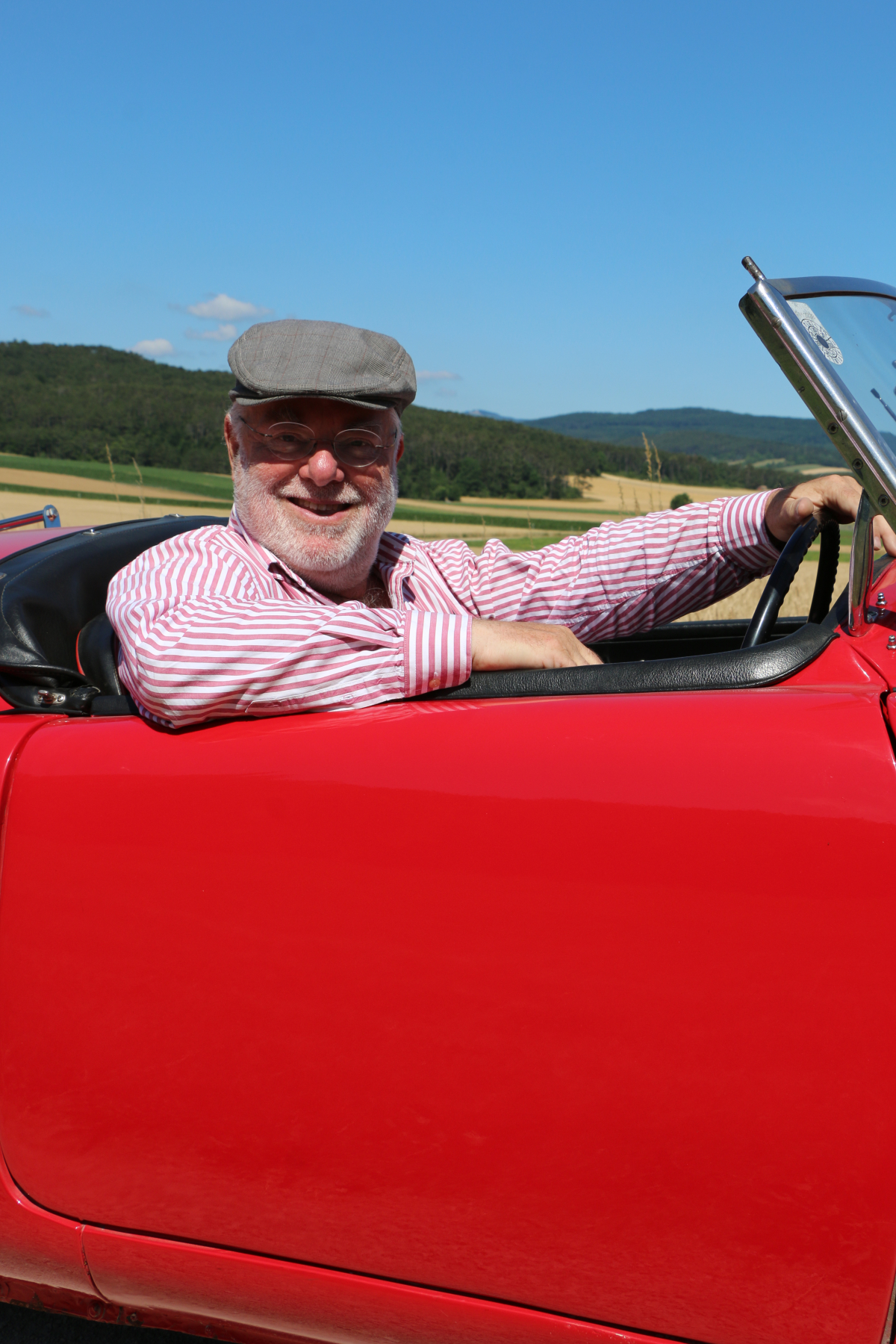
Dear Members and Friends of the ABS,
|
According to a poll taken by the BBC in 2024, the most famous Britons are Winston Churchill (37.32%), Queen Elizabeth II (18.47%), Isambard Kingdom Brunel (5.94%) and Alan Turing (5.3%).
|
All non-Britons might be forgiven if they have never heard of Isambard Kingdom Brunel (an engineer and pioneer of the Industrial Revolution) or Alan Turing (a logician, mathematician and computer scientist), but another great Briton might come to mind.
|
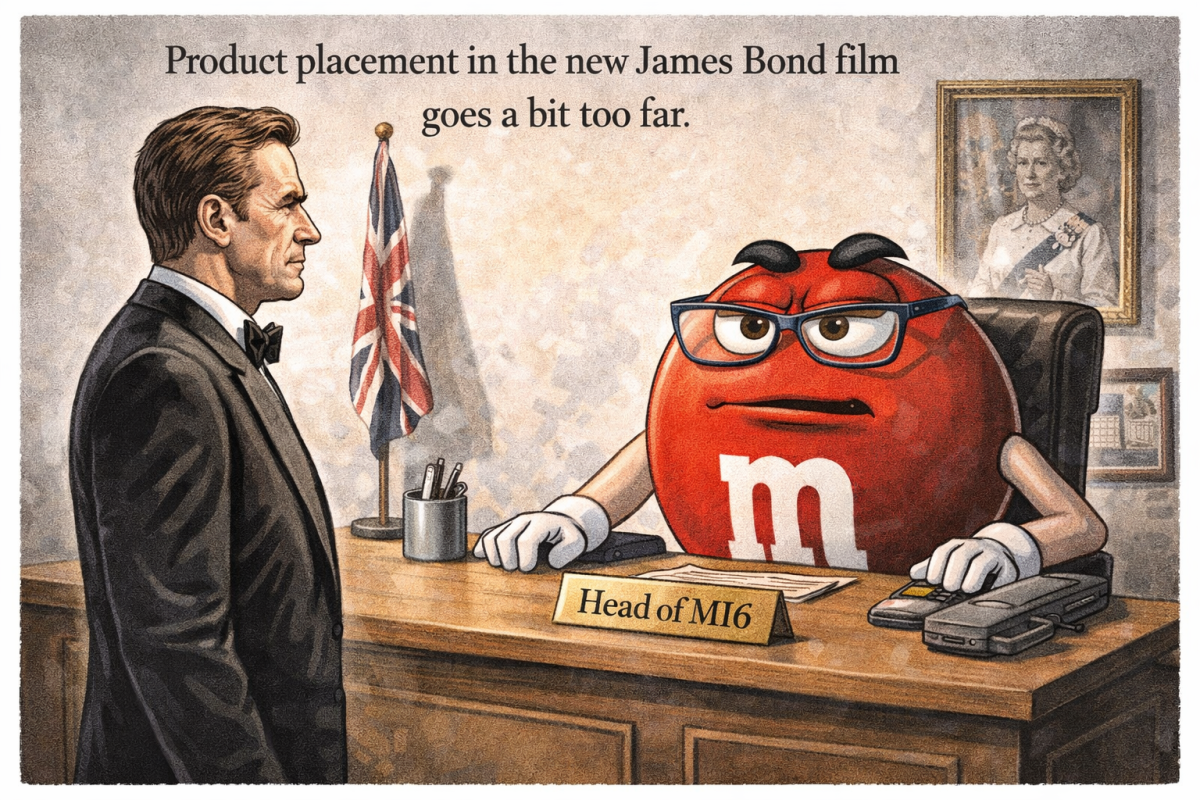
A certain Mr James Bond — perhaps better known as 007 — was "born" in April 1953, when the first James Bond novel, Casino Royale by Ian Fleming, was published in London. Perhaps he is not on the list because Mr Bond is just a fictional character?
|
|
However, let us enjoy April with two further ABS events — one of which will take you to Britain — see below.
|
See you all at one or other occasion.
|
Wolfgang M. Buchta
ABS Secretary General
|
|
|
|
|
|
PRESIDENTIAL MESSAGE
|
|
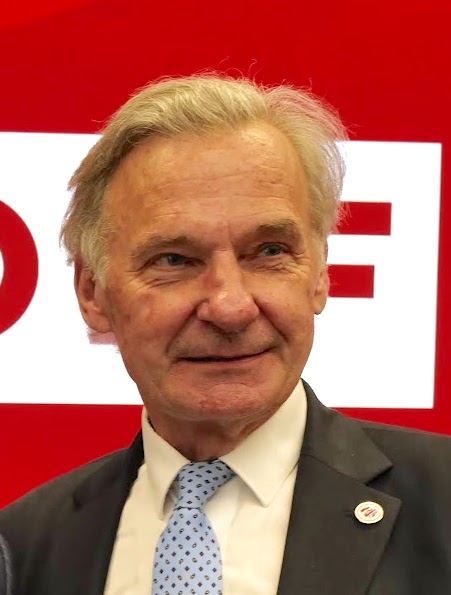
Members Recruiting Members!
|
The time has now come to put our membership recruitment initiatives into practice. As previously reported, a working group together with members of the Board has been developing a number of projects since last November, and we have recently agreed on eight initiatives. Today, I would like to briefly introduce two of them, as they come into effect immediately.
Initiative 1: Members who recruit new members from among their family, friends, or acquaintances will receive a financial reward. As soon as a newly recruited member has paid their membership fee and is thereby formally admitted in accordance with our statutes, we will pay €50 to the recruiting member, which will be transferred promptly.
In practical terms, if a member recruits three new members, they will effectively cover their own annual membership fee — and enjoy a full year and around 30 events, usually including food and drink, free of charge.
This initiative may not sound particularly innovative, but many associations follow a similar approach. Even large organisations such as the ÖAMTC offer various material incentives to members who successfully recruit others. Clearly, this model has proven its worth.
Initiative 2: In the early years, we regularly allowed accompanying persons and non-members to attend our events free of charge. At the time, this was necessary to ensure well-attended events. For several years now, we have discontinued this practice, as our 400 members already fill the available venues.
We are now reintroducing the possibility for members to invite guests who may be interested in joining. To do so, a brief email to me (kurt.tiroch@oebrg.at) with the guest’s name for our guest list is sufficient. Where capacity allows, I will be happy to accommodate such requests. Naturally, I will ensure that this does not disadvantage paying members by placing them on a waiting list.
I will be pleased to present the remaining six initiatives in forthcoming ABS News. Do stay tuned — there is more to come.
For now, I wish all of us every success in recruiting new members — "May the exercise be successful!"
|
|
|
|
|
|
Another month and another two events:
|
|
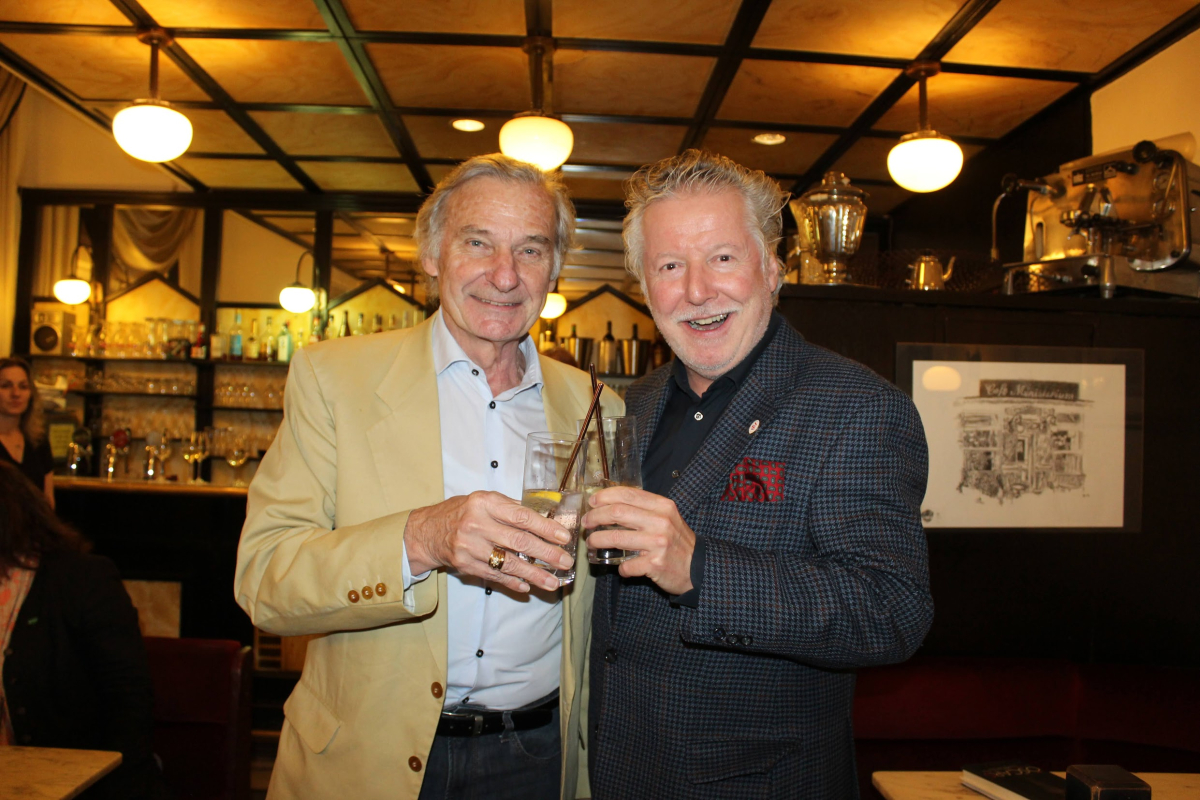
Event No. 1: Ein Abend voller Geschichten: Christian Reichhold und die „Öscars“
|
Christian Reichhold, "Our Man at Seitenblicke", spilled the beans at Café Ministerium, revealing insider information from the social scene.
|
Click here for the event report and photos
|
|
|
Event No. 2: Ein Abend mit Perlen
|
ABS member and winemaker Peter Weigl stands not only for exquisite wines but also for equally exquisite sparkling wines – as ABS members were able to see (and taste) for themselves at Café Ministerium.
|
Click here for the event report and photos:
|
|
|
|
|
|
|
|
|
No, we are not playing an April Fool’s game on you: there will be another two events in April!
|
|
|
|
"Der Schutz des österreichischen Staates vor Terrorismus, Spionage und internationalen Verbrechen", by a man who should know, Mr Omar Haijawi-Pirchner, former head of the Direktion Staatsschutz und Nachrichtendienst (DSN).
|
|
Human Rights Space (formerly Musiksalon), Diplomatic Academy
|
|
|
|
|
|
|
|
|
17-20 April – Trip to Britain: "Liverpool – Beatles, Land Rover & Bentley"
|
Trip to the Bentley factory/headquarters (Mon, 20 April); Premier League match in Everton on 18 April (Everton–Liverpool derby); Beatles pub – Cavern Club; Jaguar Land Rover on Friday, 17 April.
|
Invitation and details to follow
|
|
|
|
VICE PRESIDENT'S CORNER
|
|
|
|
How to Raise the Odds of Regime Change in Iran
America can make it easier for Iranians to revolt.
|
The decision that U.S. President Donald Trump made to attack Iran was a high-stakes gamble. When the campaign ends, whether in a week or in a month, it seems highly likely that Iran will have been stripped of much of what was left of its nuclear programme, most of its ballistic missile capabilities, its ability to project power by air or sea, and key elements of its infrastructure of repression.
|
The gamble, instead, is whether a massive air campaign can trigger a popular rebellion that takes down the regime in Tehran.
|
This could play out brilliantly, but it could also fail miserably. The accomplishments of the military campaign do not necessarily translate into regime change. Even if the Iranian people seize this opportunity to revolt, there is no guarantee that they can overturn the government. And if the United States fails, it will leave an angrier and more aggressive version of the theocratic regime in place, one likely seeking revenge and nuclear weapons.
|
There are, however, steps the United States can take to make it more likely that this time revolt turns to revolution. It can offer direct air support for Iranians who take to the streets, striking regime forces that try to stop them.
Regime change will always be a risky bet. But if Washington plays its cards right, it can increase the odds of winning it all.
|
|
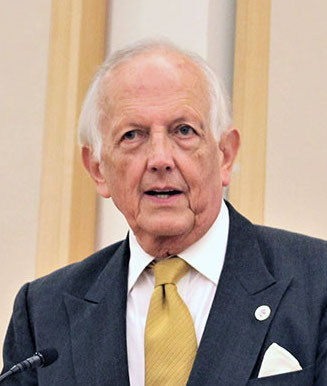
by former Ambassador Alexander Christiani
|
|
|
|
ANY OTHER BUSINESS
|
|
|
|
Winners and Losers from the latest World Disorder
|
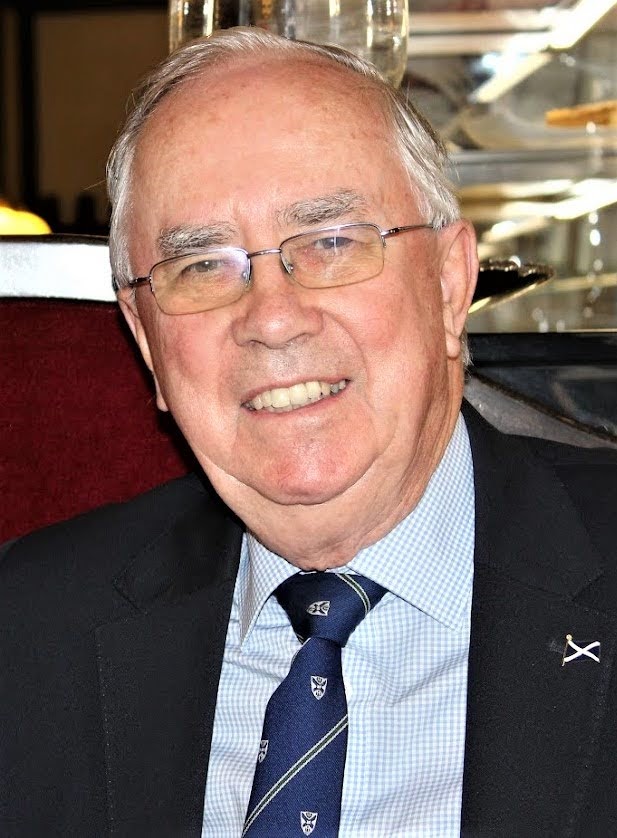
In a recent article in the Financial Times, Martin Wolf referred to a principle of American politics: if you break something you own it. President Trump started a war in the middle east on 28 February, ignoring the advice of the Director of the CIA and the Director of Counter -terrorism that Iran did not pose an immediate, direct threat to the US. Even if, as Secretary of State Rubio has suggested, Trump was persuaded by Israel to start the war, he is still responsible for stopping it, by negotiated compromise, or by declaring victory, probably short of whatever may have been his original war aims.
|
It has been obvious for years that, in extremis, the Iranian regime would play its “Trump” card; closure of the strait of Hormuz. The longer the strait is closed the greater the damage to the world economy. Trump is not only like Narcissus who fell in love with his own image, he also exemplifies Hubris – excessive pride and arrogance. He seems incapable of empathy, or even of admitting to mistakes, as when a misdirected Tomahawk cruise missile hit a girls’ school in Iran, killing over one hundred children. In Greek mythology, Hubris is followed by Nemesis, precipitating the downfall of the Narcissist. Will Trump fall? Will he declare victory? Or will the US and Israel succeed, not only in reopening the strait of Hormuz, but also in forcing the downfall of the detested Mullahs in Teheran and their brutal revolutionary guards? Do Israel and the US have the same goals? What about the collateral damage not only to the world economy, but also to the US’ erstwhile allies and partners around the world?
|
What is the impact on Ukraine, now in the fifth year of a war fending off invasion by Russia? According to Article 51 of the UN Charter, member states have the right to defend themselves against attack. The Charter does not distinguish between a democracy such as Ukraine and a theocratic autocracy such as Iran. Two Permanent veto wielding Members of the UN Security Council are in breach of its most important provision, outlawing aggression against other member states.
|
The first losers are people in countries such as Iran and Lebanon, where one fifth of the population has been displaced by Israel’s renewed attack on the Mullahs’ Hezbollah proxies. The government of Lebanon seems helpless. The hitherto stable and prosperous Gulf monarchies will be hard pressed to restore the status quo ante. The US has discredited the rules based international order set forth in the UN Charter in 1945. As a beneficiary of this order, the US has thus scored an own goal, and is already a loser in terms of its reputation. Liberal democracies in Europe are among the main losers. Disagreements between member states mean that the EU cannot act according to its economic strength, notably in relation to Ukraine where Trump fan Orban is holding up much needed financial assistance.
|
Trump has been behaving like a mafia boss with regard to allies in Europe and elsewhere. During my time (1969-2007) in the UK Diplomatic Service, the Americans always told us that there was only one thing worse than allies – not having allies. Brexit had already wrought immense damage to the UK economy, removing the country from the organisation that had been the cornerstone of its prosperity since 1973: another own goal. The country can scarcely afford the increase in defence spending that is now essential. MAGA ideologue Steve Bannon told the New Statesman that Prime Minister Starmer’s distinction between support for defensive and offensive strikes in the Gulf, is “diplomatic bullshit.” In view of the defence and intelligence relationship with the US, the UK is losing more than any other NATO ally. Attempts to flatter Trump by the UK and the NATO Secretary General have failed. Will the King’s visit to the US to celebrate 250 years of independence, go ahead in April!? Trump treats NATO as a protection racket, and has threatened to use force to seize territory - Greenland – belonging to an ally. The war has also diverted attention and resources from Ukraine: another loser, at least for now.
|
There are no real winners. But the US cannot impose its will on China which portrays itself as a stable state which keeps to the rules regarding world trade, and does not attack other countries. Threats to Taiwan, as part of China, do not count, from a Chinese perspective. China has a stranglehold on rare earths, essential in the modern economy. Russia, with an economy one tenth the size of China’s, is a client state, reliant on Chinese technology to keep its war machine running. But Russia is a winner in the short term, because high oil prices help to finance the war against Ukraine. This war is however, a strategic disaster for Russia. Putin has left himself no way out if Ukrainian resistance continues.
|
Israel is winning at present. It has decimated Hamas in Gaza, and is applying the same methods to Hezbollah in Lebanon. Iran will not pose a nuclear threat in the period ahead. But will Israel be secure in the longer term, surrounded by weak and resentful neighbours, deprived perhaps of stable partners in the Gulf? Nor is it likely that Iranians will be free of the Mullahs and the revolutionary guards who may be supported by twenty percent of the population. (Iran is home to 90 million people.) As long as they retain the ability to launch drones and rockets in the wider middle east, and to suppress protest at home, by brute force, preventing regime change, they are the winners in the war started by President Trump. His decision on 23 March to postpone, at least for five days, massive attacks on Iran’s energy infrastructure is evidence of that. The Iranians’ credible threat of retaliation by attacking the desalination plants on which people in the Gulf states depend for life itself, was enough.
|
|
by Ambassador (Retd) Associate The Ambassador Partnership LLP
|
|
|
|
|
|

|
 
|
|
Account name: Österreichisch-Britische Gesellschaft | Erste Bank der oesterreichischen Sparkassen AG | IBAN: AT422011184479592100 | BIC: GIBAATWWXXX
|
Für den Inhalt verantwortlich: Wolfgang M. Buchta
|
|
|
|
|
|
|