|
|
|
|
- Editorial: Autumn of 1976
- Presidential Message: Principles for Running a Successful Society
- Remembering September
-
- Vice President's Corner: The Right Way to Sanction Russia
-
|
The Anglo-Austrian Society: Building Bridges Since 1944
|
- The Last Page
|
|
|
|
|
EDITORIAL
|
|
Dear Members and Friends of the ABS,
|
Looking back fifty years and some 1,000 miles west to Britain, 4 October 1976 brought a railway milestone: British Rail introduced the InterCity 125 between London Paddington and Bristol. With a top operating speed of 125 mph (201 km/h), it was the world’s fastest diesel passenger train in regular service. Well done, British Rail!
|
Well done, Mr Hunt, too. At the rain-soaked Japanese Grand Prix on 24 October, Niki Lauda retired after two laps while James Hunt finished third. That was enough to win the Formula One World Championship by a single point over Lauda. For Austro-British spectators, it could hardly have been more dramatic.
|
Yet behind these triumphs, Britain was in economic turmoil. In October 1976, sterling fell below $1.60, a record low at the time. James Callaghan’s government had turned to the International Monetary Fund (IMF) for help in September; agreement on a $3.9 billion loan followed in December.
|
Enjoy October and the events the ABS has prepared for you.
|
Wolfgang M. Buchta
ABS Secretary General
|
|
|
|
|
|
PRESIDENTIAL MESSAGE
|
|
Principles for Running a Successful Society
|
I wrote two books on this subject some years ago. Based on my experience in recent years, I would now like to add a few brief thoughts to what I wrote then:
|
Success. Focus on making things work rather than on the possibility of failure. Determination, the ability to persuade, perseverance, kindness, optimism and a pleasant manner in conversation can achieve a great deal.
|
Possibility. To achieve what is possible, we must sometimes aim for what seems impossible. When in doubt, do not set your sights too low, as compromises are often necessary. Encourage others to join in shared initiatives; working together usually produces better results.
|
Improvement. Those who stop trying to improve stop being good. The better is always the enemy of the good, and standing still is, in truth, falling behind.
|
Appreciation. To succeed, you must genuinely like people. Take pleasure in approaching them and making contact. Listen carefully and consider other points of view to find good solutions to challenges.
|
Perspective. We can only take people as they are; there are no others. We must meet people where they are, taking account of their circumstances. What they know and how they feel may differ greatly from our own position.
|
|
|
|
|
|
September brought us two events after the summer break:
|
|
|
|
Event No. 1: Besser als ihr Ruf
|
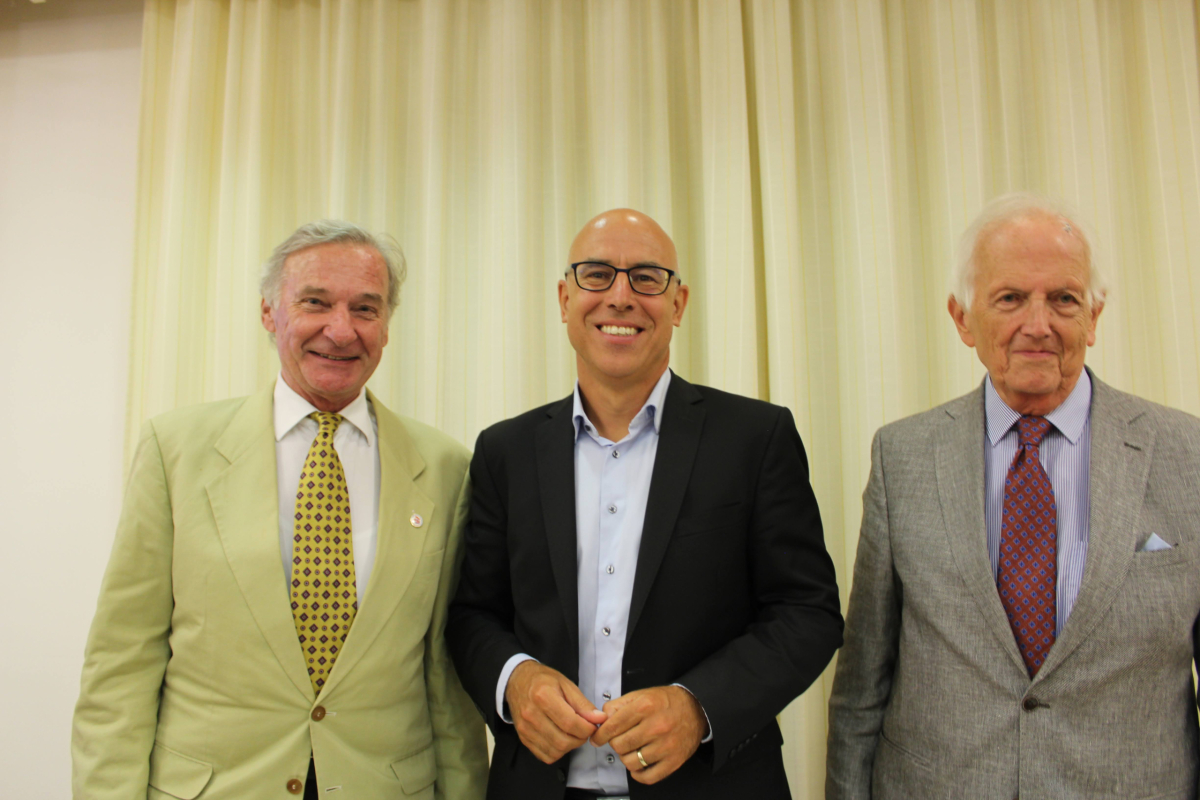
Gabriel Felbermayr, Director of the Austrian Institute of Economic Research (WIFO), spoke about Austria’s economic policy. His verdict was more encouraging than the headlines might have led us to expect.
|
Click here for the event report and photos
|
|
|
|
|
Event No. 2: Vom Wetterfrosch zum Gemischten Satz
|
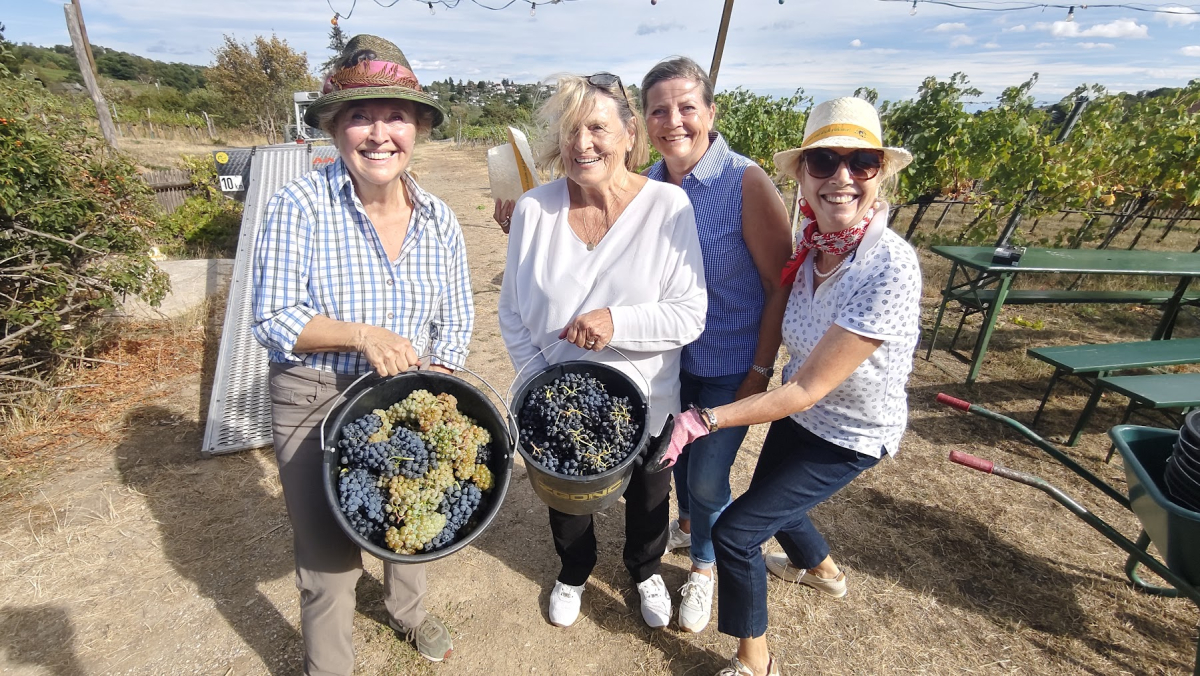
First the harvest, then the wine. September brought the ABS’s first grape harvest festival.
|
Click here for the event report and photos:
|
|
|
|
|
|
|
After a quiet summer and two events in September, October brings a fuller programme.
|
|
|
|
Festival La Gacilly-Baden
|
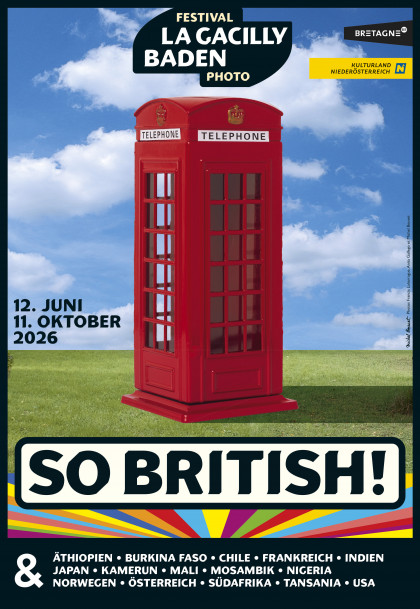
From 12 June to 11 October, around 1,500 large-format photographs make up a seven-kilometre open-air route through Baden’s parks, gardens and streets.
|
Meeting point: outside Baden Town Hall, Hauptplatz 1, at 3 p.m.
|
|
|
|
|
|
|
|
Visit by the Anglo-Austrian Society (AAS) to Vienna
|
Board and corporate members will meet a delegation from our sister society in Britain.
|
|
|
|
A safari, the Okavango Delta, Victoria Falls and much more.
|
|
Invitation already sent; the trip is fully booked.
|
|
|
|
|
|
VICE PRESIDENT'S CORNER
|
|
The Right Way to Sanction Russia
|
How Europe Can Disrupt Moscow’s Oil Windfall
|
When Russia invaded Ukraine in 2022, Western countries responded with aggressive economic restrictions, freezing Russia’s official foreign exchange reserves, placing export controls on critical technology, and sanctioning scores of its political, military and business leaders. Yet more than four years later, the war is still going on, and Western sanctions have inflicted only limited pain on the Russian economy. Russia continues to trade oil and other commodities, recently receiving a massive windfall as the closing of the Strait of Hormuz caused global oil prices to soar. These profits are raising the government’s tax revenue at a critical time, helping it fund the war in Ukraine and stabilize the country’s financial markets. If sanctions were looking ineffective before, Russia’s economic rebound since the start of the United States’ and Israel’s war with Iran have only strengthened that perception.
|
But it is wrong to write off sanctions as a policy tool. When Western policymakers portray them as a wasted effort or counterproductive, their governments are playing right into Moscow’s hands. And they are discounting the enormous strain that sanctions could still place on the Russian system if properly enforced. By reducing the flow of hard currency into Russia, sanctions have the potential to send the ruble into a spiral of depreciation, which in turn would send inflation soaring and destabilize the country’s broader economy.
|
It is not too late to make sanctions effective. One-fifth of Russia’s GDP is directly linked to oil and gas extraction, and exports account for nearly one-third of government revenues. It passes through European-controlled waterways, replenishes its numbers with European-owned ships, and can be forced to engage with a Western-dominated insurance industry. All of this gives Europe the power to restrict the fleet’s operations, and thereby drastically reduce Moscow’s ability to finance its ruinous war.
|
The absence of action, meanwhile, hands Moscow an easy win. Russia will continue to replace aging tankers with newer ones and collect enormous oil profits from maritime trade that will feed directly into its war machine in Ukraine. Europe has policy levers it can pull to stop the shadow fleet, and that is an opportunity it cannot afford to pass up.
|
|
by former Ambassador Alexander Christiani
|
|
|
|
|
|
ANY OTHER BUSINESS
|
|
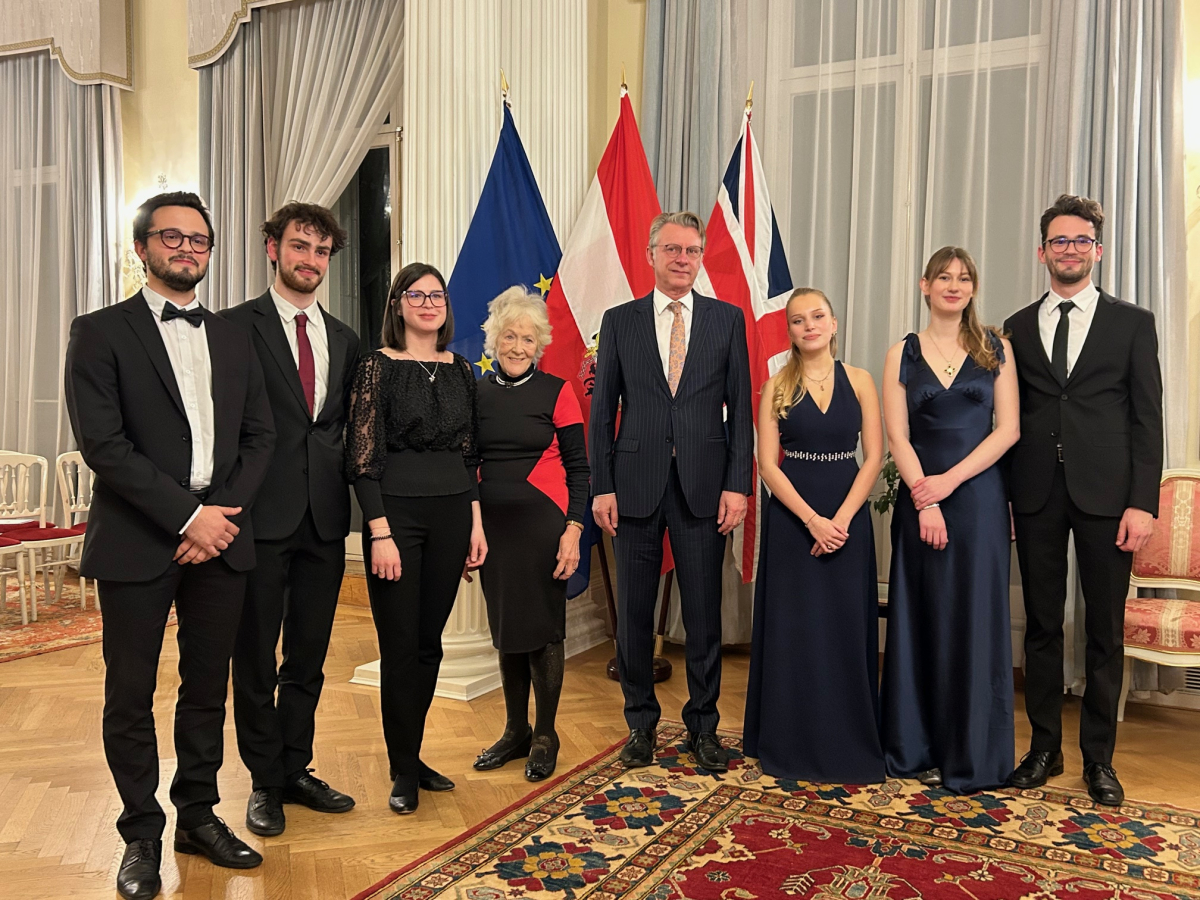
The Anglo-Austrian Society: Building Bridges Since 1944
|
Founded in London in 1944 by Austrian refugees and British supporters, the Anglo-Austrian Society grew out of a shared determination to help restore a free and democratic Austria. In the difficult post-war years it provided practical relief, particularly for Austrian children, many of whom took part in exchange holidays in Britain. At the same time, cultural initiatives brought Austrian artists and institutions back to British audiences. More than eighty years later, that original spirit remains alive. The Society promotes friendship and understanding between Austria and the United Kingdom through lectures, concerts, visits, social gatherings and its bilingual Virtual Stammtisch. Its members, in Britain, Austria and beyond, are brought together by a lively interest in both countries—their culture, history, science and way of life. The Society is also a grant-giving charity, supporting educational and cultural projects that create lasting links between the two countries. Its work is deliberately non-political: it is founded on personal contact, curiosity and mutual respect. The Anglo-Austrian Society and the Austro-British Society in Vienna are natural partners. Though based in different countries, both pursue the same simple but enduring purpose: to ensure that Anglo-Austrian friendship is not merely remembered but actively lived.
|
|
|
|
|
|
|
|

|
 
|
|
Account name: Österreichisch-Britische Gesellschaft | Erste Bank der oesterreichischen Sparkassen AG | IBAN: AT422011184479592100 | BIC: GIBAATWWXXX
|
Für den Inhalt verantwortlich: Wolfgang M. Buchta
|
|
|
|
|
|
|